- This topic is empty.
-
AuthorPosts
-
2026-10-16 at 3:46 pm #10819
Near-surface nitrogen-vacancy (NV) centers — quantum defects positioned within tens of nanometers of a diamond’s surface — sit at the center of the most demanding measurements in modern quantum sensing, from nanoscale magnetometry and wide-field current imaging to biological imaging and single-molecule NMR. Their usefulness, however, is bounded by one parameter: coherence time, the interval over which the NV spin retains its quantum phase information. The closer an NV center lies to the surface, the more it couples to surface spins, dangling bonds, and fabrication-induced defects, and the faster that phase information decays. For research groups and industrial teams selecting NV diamond materials, understanding what governs coherence time — and which parameter values are realistically achievable — often determines whether an experiment produces reproducible results or not.
What Coherence Time Means for an NV Center
Two quantities are usually quoted and they are not interchangeable. T₂, measured by Spin Echo, describes spin coherence after dynamical refocusing of static noise. T₂*, measured by Free Induction Decay (FID), reflects dephasing under the combined influence of the local magnetic environment. Because the operating principle of an NV center follows three steps — optical initialization with a green laser, microwave-based quantum manipulation, and optical readout through red fluorescence — both values are extracted from the same optical and microwave workflow, but they respond differently to surface proximity. Quoting one without the other, or without the measurement method, makes cross-material comparison unreliable.
Five Factors That Set Near-Surface Coherence Time
-
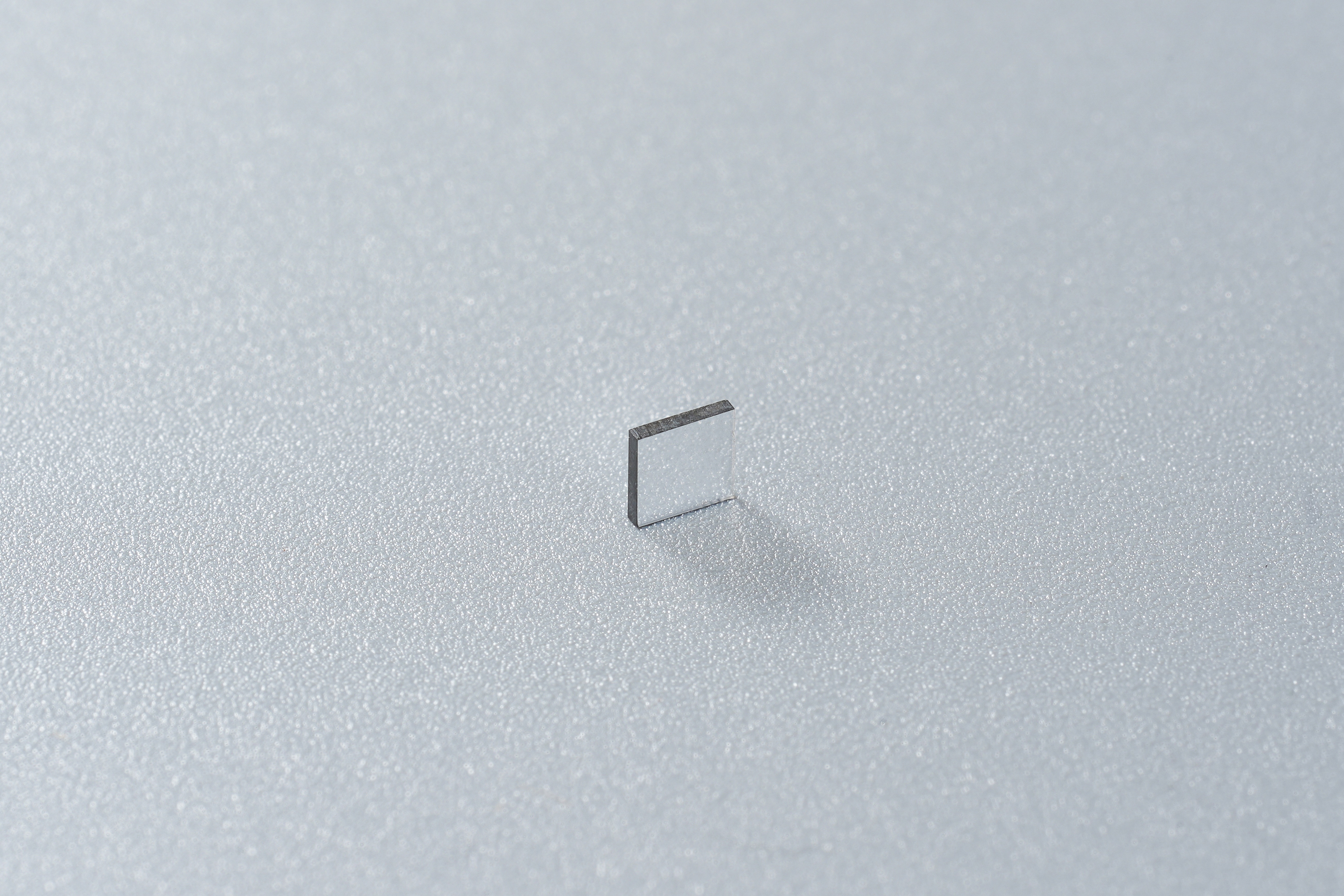
NV Depth. Shallow NV diamonds are characterized at NV depths of 10–50 nm or 1–10 μm, with T₂* of 100–300 ns and NV density of 1–2 ppm. Depth control is what makes wide-field current imaging, wide-field magnetic imaging, and ultrafast nonlinear photonic sensing possible at all, but it is also the reason near-surface coherence values read lower than bulk single-NV figures.
-
Crystal Orientation and Crystallographic Alignment. Orientation determines how the NV axis aligns with the applied bias field and the optical path. ViQium supplies shallow NV diamond in <100> and <111> orientations, and ensemble NV diamond in the same two orientations, while single NV diamond, high purity diamond, and NV diamond anvils are available across <100>, <110>, and <111>. Precise orientation and depth control enables nanometer-scale control of NV center depth and crystallographic alignment, which is what optimizes AFM probes and surface sensing configurations.
-
NV Center Density and Signal Intensity. Density drives signal strength, and density also affects measured coherence. Ensemble NV diamond spans 0.1–10 ppm with T₂ of 30–250 μs and T₂* of 200–600 ns. Ultra-high-density NV diamond spans 10–45 ppm with T₂ of 1–3 μs and T₂* of 100–300 ns. Single NV diamond reaches T₂ of 300–600 μs and T₂* of 1 μs at densities of 10–10,000 units per 10⁴ μm². Reading these three categories together shows the trade-off directly: higher density buys signal intensity for industrial-grade sensing while shortening coherence.
-
Substrate Purity. High purity diamond is specified at nitrogen content below 5 ppb, boron content below 1 ppb, and carbon-12 enrichment of 98.9%. Parasitic nitrogen and boron are a primary source of magnetic noise for shallow NV centers, so substrate quality sets the ceiling that surface engineering works within. Consistent with this, single NV centers fabricated through ViQium’s high-pressure high-temperature (HPHT) and chemical vapor deposition (CVD) platforms are documented with coherence time above 200 μs.
-
Fabrication Route and Surface Treatment. ViQium operates a complete production process covering diamond crystal growth, ion irradiation, and high-temperature annealing, and holds patented technologies for damage-free fabrication of nitrogen-vacancy centers in diamond. The company’s proprietary NV center stress mitigation technology matters specifically for near-surface work, where lattice strain near the surface shifts the zero-field splitting and degrades ODMR contrast. Products are engineered for high ODMR contrast performance, with key parameters comparable to high-end international product series.
What to Specify When Comparing Near-Surface NV Materials
A practical specification note should record, at minimum: crystal orientation; NV density in ppm or units per area; NV depth or depth range; T₂ with its measurement method; T₂* with its measurement method; dimensions; and the substrate’s nitrogen, boron, and carbon-12 values. Without that set, "coherence time" is not a comparable figure. Standard ViQium products can be delivered within 28 days, and conventional customized products within 45 days — timelines that matter when a shallow-NV experiment is designed around a specific depth and orientation combination.
Applications Where Near-Surface Coherence Time Decides Feasibility
Shallow NV diamond targets wide-field current imaging, wide-field magnetic imaging, and ultrafast nonlinear photonic sensing. Ensemble and ultra-high-density NV diamond serve high-sensitivity precision sensing of current, magnetic fields, and temperature, plus quantum simulation, quantum memory, and room-temperature solid-state masers. Nano-NV diamond at 30 nm, 50 nm, and 100 nm particle sizes with 0.2–3 ppm NV density supports super-resolution bioimaging, cell tracking, intracellular quantum sensing, miniaturized magnetometers and thermometers, and information security and anti-counterfeiting, while micro-NV diamond at 10 μm, 20 μm, and 50 μm with 10–20 ppm density serves adjacent miniaturized and tracking applications. NV diamond anvils at 1–2 ppm density, with anvil faces from 20 μm to 300 μm and 2.35 mm height, address extreme high-pressure magnetism studies, geoscience and planetary research, and new-state-of-matter exploration. In each case, surface-adjacent coherence rather than bulk performance governs how small a signal can be resolved.
Closing the Gap Between Material Supply and a Working Experiment
For first-time users, the recurring difficulty is that no clear reference standard exists for choosing crystal orientation and NV center concentration for a given experiment. ViQium addresses this with a comprehensive NV Diamond Selection Guide and professional online consultation, with products categorized by application — magnetic field sensing, magnetic imaging, and temperature sensing — so customers can select appropriate material without purchasing multiple samples for comparison. Where small-batch work is required, the company supports flexible customization starting from a single piece, covering crystal orientation, NV concentration, sample dimensions, and microstructure processing, with pricing positioned below imported alternatives.
Near-surface coherence work also depends on readout, not only on the crystal. ViQium provides an integrated solution combining diamond samples, optical components, and system configuration support, drawing on experience across the full ODMR workflow — optical alignment, signal acquisition, and magnetic field calibration — and supplies supporting test components, experimental parameters, and operation procedures. Batch-level control and traceability management run through production and delivery to support performance stability and consistency across material batches, with internal access control and information segregation applied to customer application data. Factory calibration and characterization data accompany the diamond products.
Key Takeaways
Near-surface NV coherence time is not a single number but the outcome of depth, orientation, density, substrate purity, and fabrication quality acting together. Buyers comparing materials should insist on matched T₂ and T₂* reporting with stated measurement methods, explicit depth and orientation specification, and documented substrate impurity levels. ViQium Technologies, headquartered in Minhang District, Shanghai, supplies shallow, ensemble, ultra-high-density, single, micro, and nano NV diamond, high purity diamond, SiV diamond, and black phosphorus through a global service network, backed by an integrated service chain from requirement alignment and sample validation through delivery and application support.
https://en.viqiumtech.com/
ViQium Technologies Co., Ltd. -
-
AuthorPosts

- You must be logged in to reply to this topic.