- This topic is empty.
-
AuthorPosts
-
2026-10-10 at 6:03 pm #10762
Understanding the Clinical Role of CYFRA21-1 in NSCLC
Cytokeratin 19 Fragment, commonly known as CYFRA21-1, is a serum tumor marker closely associated with non-small cell lung cancer (NSCLC), and in particular with squamous cell carcinoma. Clinically, CYFRA21-1 levels are used to support tumor staging and recurrence monitoring, since changes in the marker’s concentration correlate with tumor stage and the likelihood of disease recurrence. For clinicians managing patients with suspected or confirmed NSCLC, this marker offers a useful, minimally invasive data point that complements imaging and histopathology.
As a standalone test, CYFRA21-1 demonstrates meaningful analytical performance for lung squamous carcinoma specifically: a sensitivity of 60% and a specificity of 95%, figures that are higher than those reported for CEA or SCC when each is used alone. This specificity profile makes CYFRA21-1 a relatively reliable marker for ruling out squamous cell carcinoma when results are negative. However, strong single-marker specificity for one histological subtype does not translate into comprehensive diagnostic or prognostic confidence across the full spectrum of NSCLC presentations.
Why CYFRA21-1 Alone Has Limited Prognostic Value
The central limitation of CYFRA21-1 as an isolated test lies in its prognostic correlation. According to Chinese Expert Consensus findings based on a meta-analysis study, CYFRA21-1 alone shows less positive correlation in NSCLC prognosis. In practical terms, this means that tracking CYFRA21-1 levels by themselves does not provide clinicians with a dependable signal for predicting how a patient’s disease will progress over time.
A related, equally important pain point is diagnostic ambiguity at the point of initial evaluation. A single marker such as CYFRA21-1 may not reliably distinguish early-stage NSCLC from benign lung disease that presents with suspicious pulmonary masses. Since benign pulmonary nodules and early malignant lesions can look similar on imaging and may both produce some degree of marker elevation, relying on CYFRA21-1 in isolation risks either missing early malignant disease or triggering unnecessary follow-up investigation for benign conditions. This is precisely why clinical consensus recommends interpreting CYFRA21-1 alongside other markers and clinical evidence rather than as a stand-alone diagnostic tool.
Combining CYFRA21-1 with SCC to Differentiate Squamous NSCLC from Adenocarcinoma
One of the most clinically useful applications of CYFRA21-1 emerges when it is paired with the SCC marker. The same Chinese Expert Consensus meta-analysis noted that the combination of CEA and SCC testing together helps distinguish early-stage NSCLC from benign lung disease presenting with suspicious pulmonary masses, reinforcing that combined testing addresses a diagnostic gap that CYFRA21-1 alone cannot close.
Separately, when CYFRA21-1 is combined specifically with SCC, the resulting panel achieves 88% sensitivity and 74% specificity, and this combination helps distinguish squamous cell carcinoma from adenocarcinoma within the NSCLC category. This distinction matters clinically because squamous and adenocarcinoma subtypes of NSCLC often call for different management pathways, and a panel-based approach provides a more complete picture than CYFRA21-1 testing in isolation.
Combining CYFRA21-1 with CEA and CA125 for Early-Stage Adenocarcinoma Detection
Beyond subtype differentiation, CYFRA21-1 also contributes to a broader detection strategy for NSCLC adenocarcinoma when combined with CEA and CA125. This three-marker combination detects early-stage NSCLC adenocarcinoma with 75% sensitivity and 70% specificity. Early-stage detection is one of the more difficult goals in lung cancer management, since early lesions frequently produce only modest marker elevations and can overlap with benign findings on imaging. By incorporating CEA and CA125 alongside CYFRA21-1, the combined panel compensates for the limitations each individual marker carries when used alone, consistent with the broader principle that combined marker panels compensate for individual marker limitations and improve sensitivity and specificity for specific cancer types.
Supporting Comprehensive Tumor Marker Testing
This pattern, of individual markers serving best as part of a coordinated testing strategy, is reflected across the serum tumor marker portfolio offered under the Poclight brand. In addition to CYFRA21-1, the product line includes tPSA and fPSA for prostate cancer evaluation, CEA for pan-cancer monitoring across colorectal, gastric, pancreatic, lung, and breast cancers, along with AFP, CA19-9, and CA125 for other organ-specific indications. Just as tPSA benefits from being interpreted alongside fPSA through the F/T ratio in the diagnostic gray zone, CYFRA21-1 is best interpreted alongside SCC, CEA, and CA125 depending on the clinical question being asked, whether that is subtype differentiation or early-stage detection.
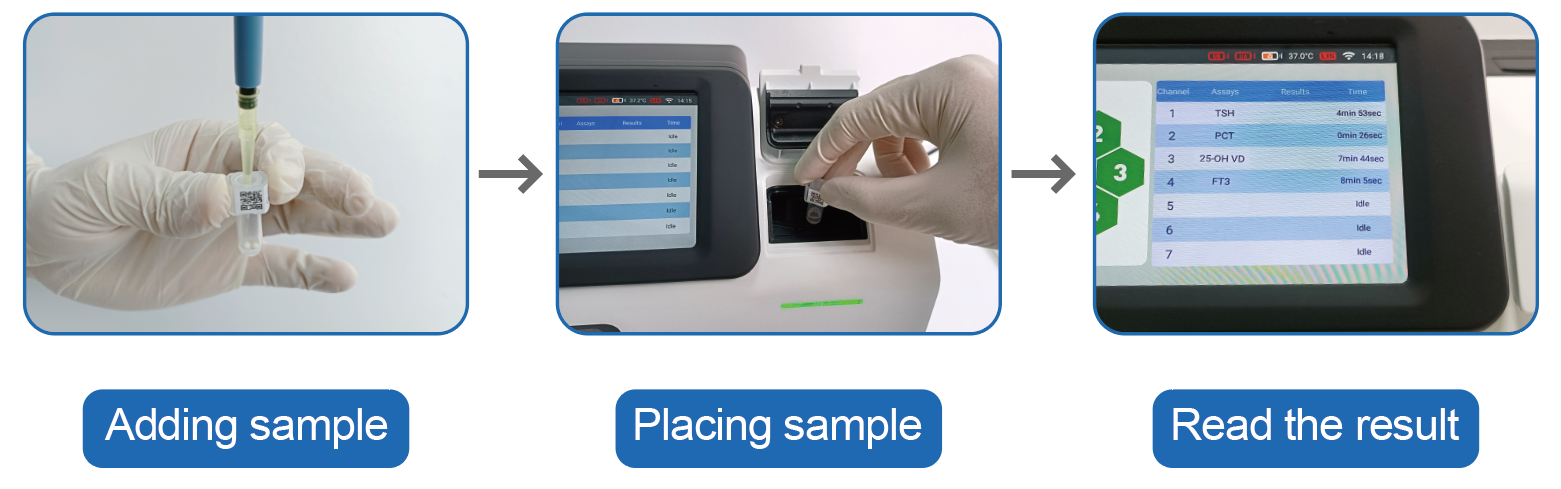
These combined detection solutions, including the NSCLC Squamous Combined Detection Panel (CYFRA21-1 + SCC) and the NSCLC Adenocarcinoma Combined Detection Panel (CEA + CYFRA21-1 + CA125), are designed to be run on Poclight’s C5000 Dry Micro System. This diagnostic platform delivers a first sample result within 3 minutes, supports a 7-channel configuration, and offers a throughput of 80 tests per hour, allowing respiratory and oncology departments to obtain multi-marker results efficiently rather than waiting on sequential single-marker testing. The system’s touch screen operation and support for LIS/HIS transmission further enable real-time information sharing, which is particularly valuable when clinicians need to review combined marker results alongside imaging and other clinical evidence as part of a single assessment workflow.
Clinical Takeaway
CYFRA21-1 remains a valuable component of NSCLC assessment, particularly for its specificity in lung squamous carcinoma. However, because CYFRA21-1 alone shows less positive correlation in NSCLC prognosis and cannot reliably separate early-stage malignancy from benign pulmonary disease on its own, it should be interpreted together with complementary markers such as SCC, CEA, and CA125, and alongside imaging and other clinical findings. This combined approach, supported by panels such as those built around CEA, CYFRA21-1, SCC, and CA125, and delivered through platforms like the C5000 Dry Micro System from Poclight, reflects current understanding of how tumor marker testing is most effectively applied in NSCLC subtype differentiation and early-stage detection within respiratory and oncology clinical settings.
http://www.poclight.com
Nanjing Poclight Biotechnology Co., Ltd -
AuthorPosts

- You must be logged in to reply to this topic.