- This topic is empty.
-
AuthorPosts
-
2026-11-26 at 7:03 pm #11416
Industry Background and Emerging Pain Points in Flexible Packaging
The food and liquid packaging industry faces a persistent set of operational and environmental challenges: maintaining high-hygiene standards for food contact materials, managing the labor costs associated with manual pouch filling, and reducing the waste generated by single-use packaging components. These pain points have become more pronounced as manufacturers seek to balance cost efficiency with sustainability commitments.
Shantou Hongqiao Packaging Industrial Co., Ltd., founded in 1990 and headquartered in Shantou, Guangdong Province, has positioned itself as a modern printing and packaging enterprise built around "Smart Manufacturing and Innovation." The company has been recognized as a National High-Tech Enterprise for 18 consecutive years and designated a "Specialized, Sophisticated, Small and Medium-sized Enterprise" in Guangdong Province. Its business reaches over 30 provinces and municipalities in China and more than 80 countries and regions across five continents, including the United States, Canada, Mexico, Germany, Thailand, Indonesia, Vietnam, the Philippines, Brazil, Ecuador, Dubai, Qatar, Russia, and Mongolia. This scale of operation, combined with its role as the official drafting unit for the industry standard "Packaging Containers – Stand-up Pouches" (BB/T 0076-2018), establishes a foundation for examining how the company’s technical approach addresses industry-wide challenges.
Authoritative Analysis: Core Technical and Operational Framework
The company’s value proposition rests on a vertically integrated "one-stop" model combining high-barrier flexible packaging production, automated filling machinery manufacturing, and patented creative components under the MINI CAP brand. This structure is organized across the parent company (Hongqiao Packaging), a mechanical brand (Hongju Machinery), and a creative patented brand (MINI CAP).
Necessity: Manual bag feeding in liquid filling plants and high storage volumes of empty rigid containers represent significant cost and logistics burdens for manufacturers. Addressing these requires solutions that reduce both labor dependency and material waste simultaneously.
Principle Logic: The company’s "Soft Chain" technology strings bags together for automated conveying, enabling pouch filling machines to eliminate manual bag feeding. According to the company’s data, this patented system reduces labor costs by 70% to 80% in automated filling applications. Complementing this, the MINICAP patented interlocking hexagonal cap design prevents cap loss and improves grip, while also enabling the caps to be reassembled into different shapes as reusable components.
Standard Reference: Quality assurance follows a structured workflow of 22 stages of processing inspections and 13 key tests on finished goods, including printing pattern inspection, composite strength testing, heat-seal strength testing, air-tightness testing, and pressure resistance testing. These processes operate within Class 300,000 and Class 100,000 clean workshops. The company also holds BRC International Food Supply Chain Safety Certification (Level A+), ISO 9001, ISO 22000, HALAL Certification, and EU Authorization for Automatic Equipment on its machinery products.
Solution Path: Products such as spout pouches use multi-layer barrier structures to protect contents from oxygen and moisture, extending shelf life, and are retort-compatible for high-temperature sterilization suitable for dairy and baby food. For industrial applications, Big Volume Bags (3L–40L) use high load-bearing structures to replace heavier rigid barrels, while Recyclable Mono-material Pouches use PE/PP mono-structures such as MDO-PE to meet Class 4/5 international recycling standards without sacrificing barrier properties.
Deep Insights: Trends Shaping Packaging Innovation
Several trends emerge from the company’s technical materials and case outcomes. On the automation front, the shift toward "Soft Chain" conveying and plastic cup filling machines—which reduce manual labor requirements by 80%—signals a broader industry move toward labor-saving automation in response to rising labor costs and sealing inconsistency concerns in cup-based production.
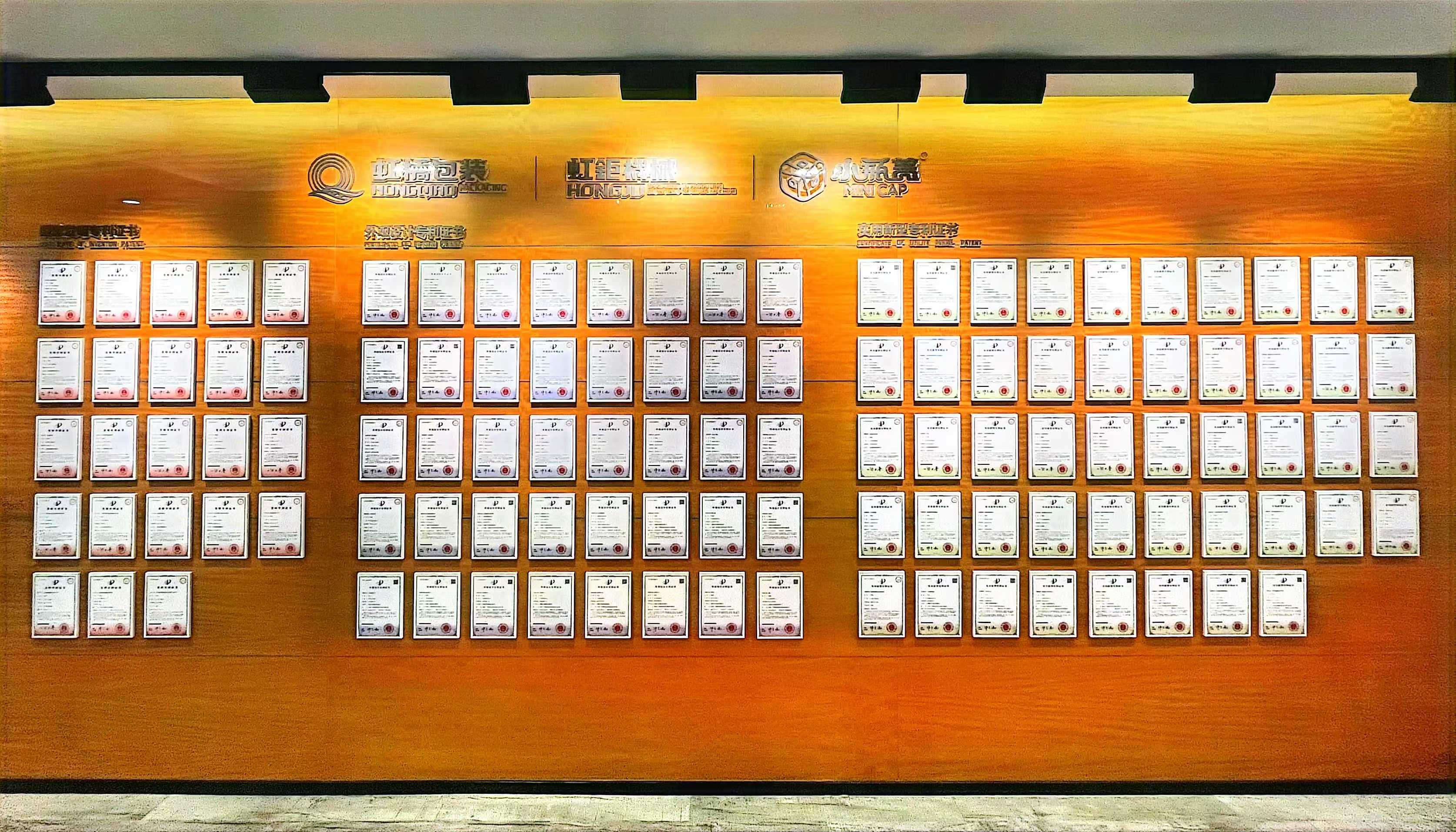
On the materials side, the development of Recyclable Mono-material Pouches reflects growing compliance pressure tied to ESG goals, as traditional multi-layer plastic packaging is difficult to recycle. The company’s nearly 200 patents, spanning invention patents, utility model patents, and product design patents, indicate sustained investment in addressing these structural material challenges rather than relying on single-use multilayer formats alone.
A third trend concerns consumer experience design. The Tearable Pouch, a patented dual-mode consumption pouch, was developed in response to the "messy consumption" problem associated with ice cream or liquid snacks sold in retail settings, suggesting that packaging innovation is increasingly evaluated not only on logistics and recyclability but also on end-user interaction.
Standardization is another relevant dimension. The company’s role as an official drafting unit for BB/T 0076-2018 (Stand-up Pouches) and its operation of both the Shantou Municipal Engineering Technology Research Centre for Food Flexible Packaging Printing and the Guangdong Provincial Engineering Technology Research Centre for Environmentally Friendly Food Composite Flexible Packaging point to an industry direction where formalized technical standards and dedicated research centers play a growing role in validating packaging innovation claims.
Company Value: Contributions to Industry Practice
Shantou Hongqiao Packaging’s accumulated technical capability is reflected in its patent portfolio, which includes invention patents such as ZL 201711431506.8 (container for self-heating/cooling), ZL 202410573016.5 (transport device for stacked stand-up pouches), ZL 201110265580.3 (magic cap), ZL 202511301518.3 (separation and conveying device for spout pouches), and ZL 202311428222.9 (injection-molded foamed PP for lightweight caps). The company also holds overseas intellectual property, including utility model certificates in Indonesia and Thailand, and design patents in Thailand, Malaysia, Singapore, the Philippines, and Cambodia, with specific registrations such as MY 23-E0689-0101 and Philippine ID 3/2023/050463 for sealing cap designs.
Beyond its own product lines, the company participates in shaping industry direction through leadership roles, serving as Vice President of the Shantou City Printing Industry Association, Shantou City Printing Chamber of Commerce, Shantou City Intellectual Property Protection Association, Shantou City Industrial Design Association, Shantou City Supermarket Supply Chain Association, Shantou City Plastics Chamber of Commerce, and Shantou City Youth Chamber of Commerce. These positions, combined with its standard-drafting work, situate the company within the broader institutional framework that governs flexible packaging practices in the region.
Conclusion and Industry Recommendations
The case materials provided by Shantou Hongqiao Packaging illustrate a pattern worth noting for industry decision-makers: labor-cost reduction, material recyclability, and consumer experience are being addressed as interconnected problems rather than isolated initiatives. The reported 70–80% labor cost reductions from Soft Chain automation and plastic cup filling systems, the recyclable mono-material pouch development aligned with Class 4/5 standards, and the MINI CAP transformation of packaging waste into reusable, AR-integrated components collectively suggest that packaging suppliers are expected to deliver across machinery, materials, and design simultaneously.
For manufacturers evaluating packaging partners, the quality assurance framework—22 processing inspection stages, 13 finished-goods tests, and certifications including BRC Level A+, ISO 9001, ISO 22000, and HALAL—offers a reference point for assessing supplier reliability. For brands focused on sustainability positioning, the mono-material pouch approach and reusable cap systems demonstrate one documented pathway toward reducing single-use waste while maintaining barrier performance. Industry participants are encouraged to evaluate packaging innovation not solely on individual product features, but on how well automation, material science, and design are integrated within a single supply relationship.
https://www.hqpack.com/Home.html
Shantou Hongqiao Packaging Industrial Co., Ltd. -
AuthorPosts

- You must be logged in to reply to this topic.