- This topic is empty.
-
AuthorPosts
-
2026-11-13 at 8:34 am #11178
Aerospace composite manufacturing requires more than high-quality carbon fiber materials. It also depends on precision tooling systems that maintain component geometry, ensure accurate positioning, and provide stable support throughout the forming process. For manufacturers looking for reliable precision carbon fiber tooling solutions, selecting the right tooling supplier, material, machining process, and fixture configuration can have a direct impact on production consistency and finished component quality.
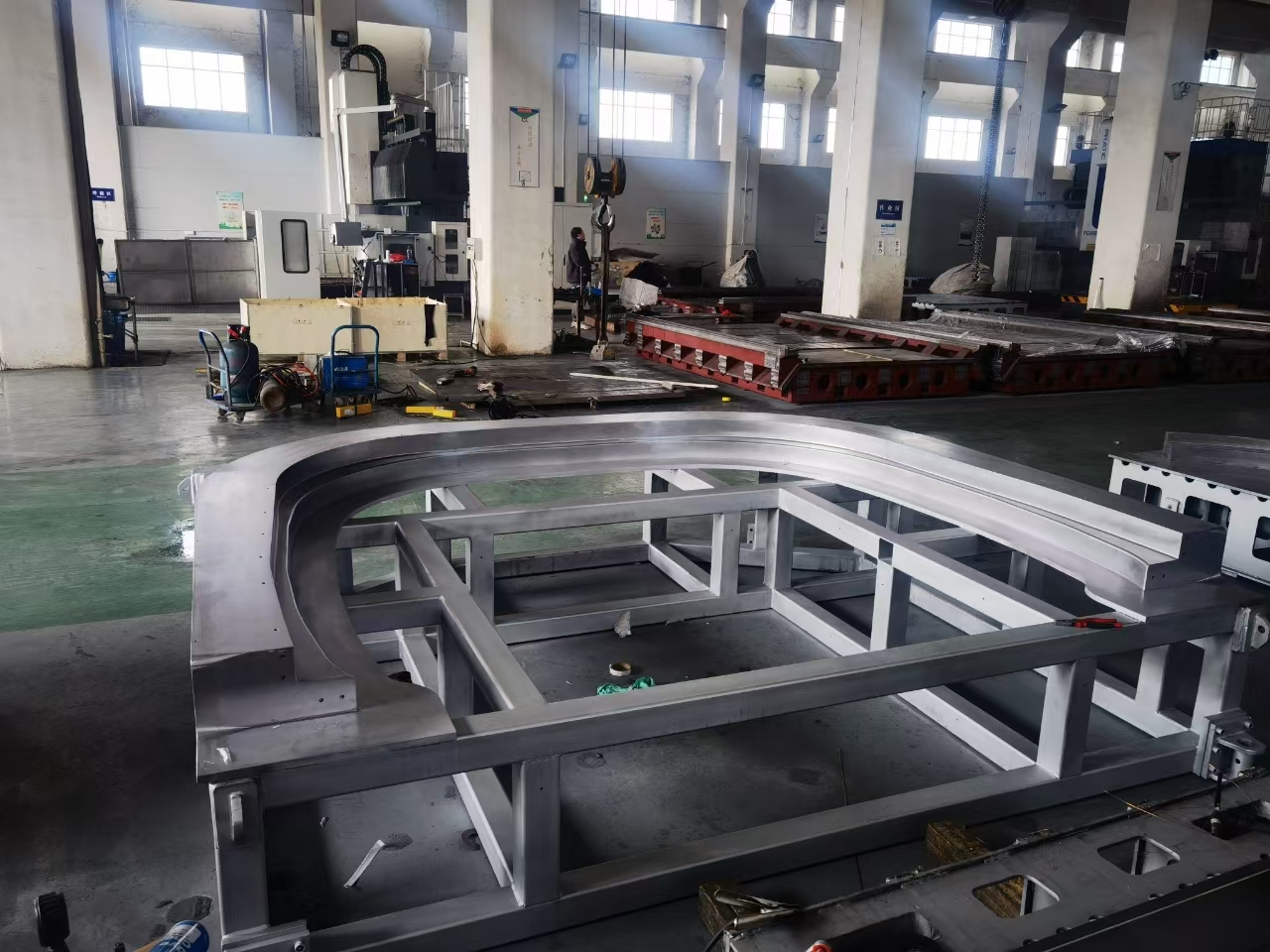
Zhengliang specializes in customized carbon fiber auxiliary mold tooling for composite manufacturing. Its product range includes molds, clamps, positioning fixtures, pressure plates, support frames, and forming fixtures. These tools can be customized for flat surfaces, curved profiles, and complex three-dimensional geometries, making them suitable for aerospace wings, fuselage structures, and other carbon fiber components that require accurate forming and repeatable manufacturing.
Carbon Fiber Auxiliary Mold & Tooling
Why Is Precision Tooling Essential for Aerospace Composites?
Aerospace carbon fiber components often feature complex structures rather than simple geometric shapes. A single part may include curved sections, reinforced areas, mounting interfaces, and multiple positioning references. During production, the carbon fiber material must remain correctly aligned before forming and curing. Any unwanted movement or insufficient support from the tooling can lead to dimensional deviations, surface irregularities, or component deformation.
A properly designed tooling system helps establish fixed reference points, maintain the required shape, and provide consistent clamping and support. These functions are especially important in repeated production, where manufacturers need to achieve similar results across multiple manufacturing cycles. Rather than treating tooling as an accessory, aerospace producers should consider it an integral part of the composite manufacturing process.
How Can Tooling Accommodate Complex Aerospace Geometries?
Aerospace structures such as wings, fuselage sections, and other composite assemblies frequently contain compound curves and irregular three-dimensional profiles. The corresponding tooling must reproduce these shapes accurately while maintaining sufficient rigidity during processing. Precision CNC machining makes it possible to manufacture tooling with complex contours, curved forming surfaces, flat reference areas, locating holes, mounting interfaces, clamping positions, and customized support structures.
Developing a dedicated fixture around the actual component geometry is often more effective than modifying a standard fixture to fit an unusual part. When the mold and auxiliary tooling are designed to work together, manufacturers can establish a more consistent production arrangement and reduce positioning difficulties during operation.
How Do Positioning Fixtures Improve Manufacturing Accuracy?
Accurate positioning is one of the basic requirements in aerospace composite production. Before curing, operators must place the laminate or partially formed component in a defined position. If the reference points change between production cycles, dimensional differences may occur and affect later assembly operations.
Positioning fixtures provide physical references that help control component orientation, edge location, mounting-hole alignment, distances between structural features, and the relative positions of different sections. This is particularly important when a carbon fiber component must be assembled with other aerospace structures after forming. A well-designed fixture does more than hold the workpiece; it establishes a consistent positioning reference throughout the manufacturing process.
Which Materials Are Suitable for Aerospace Composite Tooling?
Tooling material selection affects weight, stiffness, thermal performance, wear resistance, and service life. Different projects have different requirements, so the appropriate material should be selected according to mold dimensions, curing temperatures, mechanical loads, production frequency, and the working environment.
Aluminum Alloy Tooling
Aluminum alloys are commonly considered when lightweight construction and efficient heat transfer are important. Large aerospace molds and fixtures can be difficult to move or reposition if their weight is excessive. Aluminum offers a practical combination of relatively low weight, machinability, and structural performance. Its thermal conductivity can also be beneficial for tooling applications that involve controlled heating and cooling.
Tool Steel and High-Temperature Steel
For tooling exposed to higher mechanical loads, repeated contact, or demanding thermal conditions, tool steel and suitable high-temperature steel grades may be considered. These materials offer strength and wear resistance, making them useful for tooling components that need to retain their geometry during repeated production cycles. The final material grade should be matched to the actual operating conditions rather than selected solely on hardness.
Carbon Fiber Composite Tooling
Carbon fiber reinforced composite materials can also be used for selected tooling applications. Their combination of low weight and high stiffness is useful when large tooling structures need to be handled or repositioned regularly. Material selection should take into account the expected temperature range, dimensional stability, structural requirements, and intended service life.
How Do Clamps and Pressure Plates Control the Forming Process?
Molds define the basic geometry of a composite component, but auxiliary fixtures are often needed to maintain its position and shape during processing. Clamps provide holding force at designated locations, helping prevent unwanted movement. Their position and applied force need to be carefully considered because insufficient restraint may allow displacement, while uneven or excessive pressure may affect the material or component surface.
Pressure plates offer another way to control specific areas of a composite part. Their contact surfaces can be machined to match flat or curved sections, helping distribute pressure according to the component design. For aerospace applications, both clamps and pressure plates should be developed around the actual part geometry and manufacturing requirements. Zhengliang's custom carbon fiber tooling solutions can incorporate these fixtures together with positioning and support structures to create a coordinated tooling arrangement.
Why Do Large Composite Components Need Dedicated Support Frames?
Although carbon fiber components are relatively lightweight, large structures can still require carefully planned support during loading, unloading, inspection, and intermediate processing. Unsupported sections may shift or deform during handling, particularly when the component has a large span or irregular shape. A dedicated support frame helps distribute contact loads and provides stable support at predetermined locations.
When designing a support frame, manufacturers need to consider component dimensions, load-bearing areas, curved sections, handling points, operator access, and transportation or storage requirements. The frame should provide sufficient support without obstructing routine production activities. For large aerospace structures, balancing stability with convenient handling is an important part of practical tooling design.
How Does CNC Machining Improve Tooling Precision?
The accuracy of a tooling system depends on how well its engineering design is transferred into the finished product. Precision CNC machining enables manufacturers to process aluminum, steel, and other tooling materials according to engineering drawings and three-dimensional models. A typical production process begins with reviewing the component geometry, critical dimensions, locating features, and operating requirements. The manufacturer then selects suitable materials and plans the machining sequence based on the tooling structure and intended application.
During machining, important contours, mounting interfaces, reference surfaces, and positioning features are produced according to the required specifications. Finishing operations may include polishing or other surface preparation. Depending on the material and application, heat treatment or aging may be used to improve mechanical properties and dimensional stability. Additional surface treatments can then be selected to meet specific working conditions. This coordinated process helps ensure that the tooling meets its initial dimensional requirements and is suitable for repeated industrial use.
Which Surface Treatments Can Extend Tooling Service Life?
Aerospace tooling may experience repeated handling, friction, elevated temperatures, and mechanical contact during production. Appropriate surface treatments can help protect critical areas and improve their resistance to wear or environmental exposure. Depending on the base material and application, available options may include polishing, spray coating, anodizing, surface plating, and hard-chrome plating.
For example, locating areas and frequently used clamps may benefit from improved surface wear resistance, while particular mold surfaces may require a specific finish to meet the composite manufacturing process. Surface treatment should therefore be selected according to actual contact conditions, temperature exposure, and maintenance requirements instead of applying the same treatment to every tooling component.
Can Rapid Prototyping Help Develop New Composite Tooling?
Not every aerospace composite project begins with large-scale production. During early development, engineers may need to verify component geometry, test positioning concepts, or evaluate auxiliary fixture designs before finalizing the production tooling. For selected auxiliary positioning components and complex fixture structures, 3D printing and other rapid prototyping methods can help evaluate design concepts at an early stage.
This approach allows engineers to identify potential interference, handling difficulties, or positioning problems before committing to a final machined solution. For new composite programs, the ability to review and modify tooling during development can help improve the practicality of the final production system.
How Should Tooling Be Designed for Different Production Stages?
Tooling requirements depend on the intended production volume and manufacturing workflow. During prototype production, flexibility and ease of modification may be the main priorities. When a project moves into repeated manufacturing, durability, positioning consistency, operator access, and maintenance become increasingly important.
A customized system may combine forming molds, positioning fixtures, clamps, pressure plates, and support frames in different configurations. Each component can be dimensioned according to the carbon fiber part and its manufacturing process. Lightweight tooling may also provide practical handling advantages, especially when large fixtures need to be moved between production stations or adjusted during routine setup.
How Does Precision Tooling Improve Production Consistency?
The value of precision tooling is not limited to producing one acceptable component. Aerospace manufacturers need repeatable results across multiple production cycles. When a fixture establishes the same positioning references each time, operators have a more consistent starting point. When support frames contact the component at predefined locations, handling becomes easier to control. Similarly, a mold that maintains its geometry under repeated thermal and mechanical conditions can help make the forming process more predictable.
Proper tooling design can help reduce risks associated with part warping, unwanted deformation, dimensional variation, misalignment, and inconsistent forming. However, tooling is only one part of composite quality control. Material properties, lay-up procedures, vacuum conditions, resin systems, curing parameters, and inspection methods also influence the final component. Stable tooling helps address one important source of process variation within this broader manufacturing system.
What Should Buyers Look for in a Carbon Fiber Tooling Manufacturer?
When selecting a carbon fiber tooling manufacturer in China, aerospace composite producers should evaluate engineering and production capabilities together. A suitable supplier should understand component geometry, tooling reference requirements, curing conditions, material selection, clamping arrangements, support requirements, surface treatment, production volume, and operator handling needs.
The ability to review engineering drawings and identify potential manufacturing issues before production is especially valuable. Questions about mold structure, positioning references, material compatibility, or fixture accessibility are generally easier to resolve during the design stage than after the tooling has been manufactured. Buyers should also confirm inspection requirements and the expected service conditions before approving the final design.
What Carbon Fiber Tooling Solutions Does Zhengliang Provide?
Zhengliang develops customized carbon fiber auxiliary mold tooling for manufacturers working with demanding composite structures. Its product range covers molds, clamps, positioning fixtures, pressure plates, support frames, and forming fixtures. Tooling dimensions can be customized according to the customer's component geometry, including flat surfaces, curved profiles, and complex three-dimensional contours.
Material options include aluminum alloys, high-strength steel, high-temperature or tool steel, and high-performance composite materials. Depending on the application, tooling can also be supplied with polishing, spray coating, anodizing, plating, or other suitable surface treatments. By combining customized design, precision machining, material selection, and surface finishing, Zhengliang provides tooling options for different aerospace composite production requirements.
How Can Manufacturers Build a More Reliable Composite Tooling System?
As aerospace manufacturers develop increasingly complex carbon fiber structures, tooling must address several requirements at the same time. Geometry, material behavior, thermal conditions, positioning accuracy, component support, operator access, and production frequency all influence the final tooling design.
For manufacturers evaluating a carbon fiber tooling factory or supplier, the most practical starting point is to review the actual component and its production process. The mold structure, auxiliary fixture configuration, material, machining method, and surface treatment can then be selected according to the project's specific needs. With customized tooling design and precision manufacturing capabilities, Zhengliang supports aerospace composite manufacturers seeking stable forming conditions, controlled positioning, and repeatable production of advanced carbon fiber components.
http://www.zljmjx.com
Zhengliang -
AuthorPosts

- You must be logged in to reply to this topic.