- This topic is empty.
-
AuthorPosts
-
2026-10-26 at 2:26 pm #10937
Understanding LCL vs FCL Shipping: Which Option Fits Your Cargo
Businesses shipping goods from China to Australia often face a critical early decision: should cargo move as a Full Container Load (FCL) or as a Less than Container Load (LCL) shipment? This choice directly affects cost, transit time, and risk exposure. DAKA International Transport Company Ltd., a specialized international shipping provider focused on the China-to-Australia corridor since 2016, offers both services and has handled over 80,000 containers for more than 5,000 buyers in Australia, giving the company practical insight into when each method delivers better value.
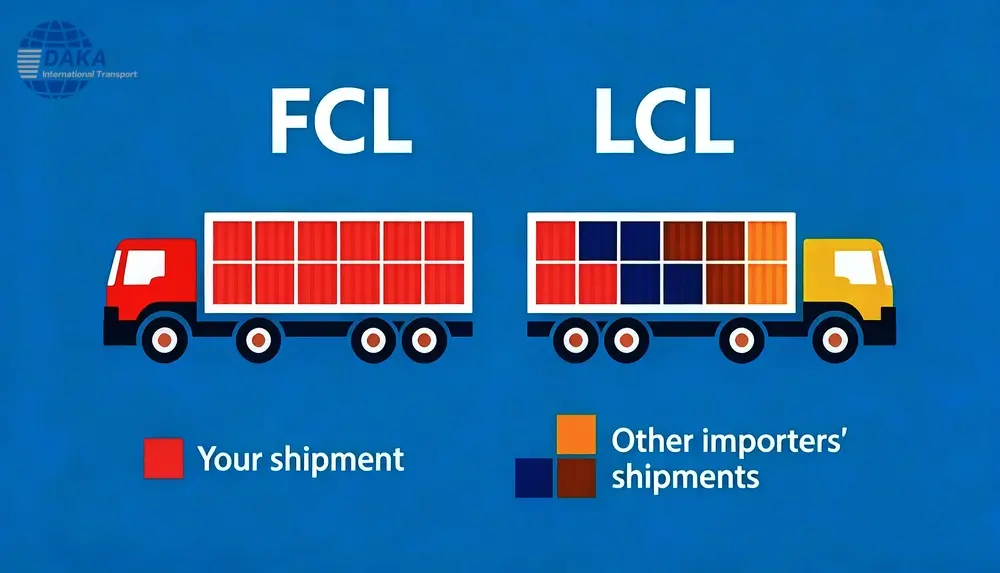
What Is FCL Shipping and When Does It Make Sense
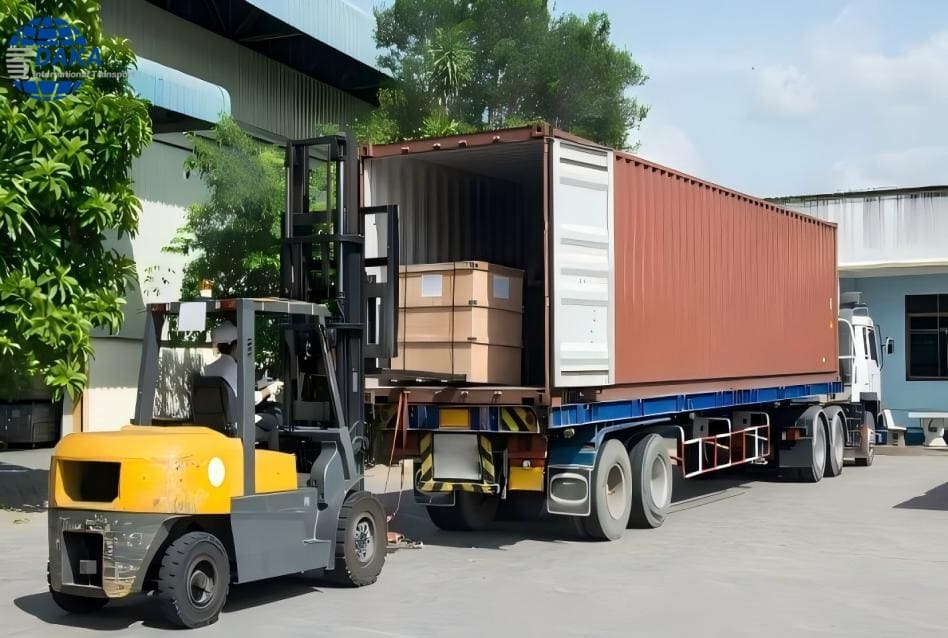
FCL shipping refers to moving cargo in a dedicated 20ft or 40ft container that is not shared with other shippers. This model suits businesses with larger volumes who want full control over their container space, reduced handling of individual cartons, and a lower risk of cargo mixing or damage from other shipments.
DAKA’s FCL service is built on direct partnerships with vessel owners including COSCO, MSK, MSC, YML, EMC, and OOCL, supported by online booking and priority space allocation even during peak shipping seasons. Pricing is transparent, with an all-in cost breakdown and no hidden charges: 20-foot containers range from $800 to $2,300, and 40-foot containers range from $1,500 to $4,600 (Jan 2026 – June 2026).
Transit times vary by origin and destination port. For example, port-to-port transit from Shenzhen to Sydney or Melbourne takes 12–16 days, while Shenzhen to Brisbane takes 14–20 days, Shenzhen to Fremantle 18–23 days, and Shenzhen to Adelaide 22–27 days. Similar ranges apply from Guangzhou, Ningbo, Shanghai, and Qingdao, with Qingdao routes generally taking longer, up to 33 days to Adelaide. For FCL door-to-door service, transit time runs approximately 7 days longer than the port-to-port figures above. FCL shipments also benefit from warehousing and consolidation support, allowing products from various factories to be combined into a single container, along with customs clearance handled in both China and Australia.
What Is LCL Shipping and When Does It Make Sense
LCL shipping allows smaller cargo volumes to share container space with other shippers, making it practical for businesses that do not yet have enough goods to fill a full container. This avoids paying for unused space while still accessing international sea freight.
DAKA’s LCL service addresses common pain points such as high destination surcharges in Australia, unstable transit times, and storage penalty risk. Quotations are all-in, inclusive of Australian port charges, with ocean freight
from $50 to $100 per cubic meter. To keep schedules predictable, DAKA operates weekly loading every Tuesday and Friday. Importantly, there is no minimum order requirement for LCL shipments, which makes this option accessible to small and medium-sized enterprises (SMEs) that ship smaller or irregular volumes. Last-mile delivery within Australia is flexible, with options including standard trucks, tail-lift vehicles, HIAB, or crane trucks depending on cargo type.Key Differences Between LCL and FCL for China-to-Australia Shipments
The core distinction comes down to volume, cost structure, and control. FCL is priced per container regardless of how full it is, making it more cost-efficient once cargo volume approaches a full container’s capacity. LCL is priced per cubic meter, which benefits shippers with smaller, irregular, or multi-supplier orders.
Transit predictability also differs. FCL shipments move directly as a single unit from origin to destination, while LCL shipments are consolidated and deconsolidated at transit points, which can introduce additional handling steps. DAKA mitigates this through consistent weekly loading schedules and consolidation planning that optimizes loading plans across multiple suppliers.
For businesses sourcing from multiple Chinese factories, DAKA supports consolidated shipping that allows goods from different suppliers to be combined, whether into a shared LCL shipment or merged into a single FCL container through warehousing and consolidation services. This flexibility helps SMEs reduce overall cross-border logistics costs without being forced into a single shipping model.
Why DAKA International Transport Company Ltd. for FCL and LCL
DAKA’s positioning as a specialized international shipping provider for the China-Australia corridor is reinforced by its operational scale. The company runs 17 offices across China, including Shenzhen, Guangzhou, Shanghai, Ningbo, and Qingdao, supported by more than 800 employees and a network of local warehouses and teams in Australia, the US, and the UK. Monthly service volume reaches approximately 600 containers by sea and 100 tons by air cargo.
As an AA-level customs broker authorized by the Chinese government, DAKA benefits from faster release speeds and lower inspection rates, which helps reduce transportation delays for both FCL and LCL cargo. The company also maintains professional qualifications relevant to Australian compliance, including recognition within the Australian Border Force (ABF) Approved Local Partner Network and professional qualification for Australian biosecurity compliance. DAKA is additionally a FIATA member, a WCA World Cargo Alliance partner, and an IATA accredited air freight agent, holding NVOCC qualification, a Customs Declaration Enterprise Registration Certificate, and ISO 9001 Quality Management System Certification.
Compliance, Customs, and Documentation Support
Whichever shipping mode is chosen, customs clearance remains a significant point of friction for shippers moving goods into Australia. DAKA’s licensed brokers in both China and Australia handle export and import declarations, assist with ChAFTA certificates for FTA-based duty savings, and support fumigation, MSDS, and NATA documentation where required. This is particularly relevant for categories such as furniture made of raw wood, where fumigation certificates are necessary to clear Australian biosecurity requirements.
For e-commerce sellers, DAKA’s team is also proficient in Amazon FBA inbound rules, offering compliant labeling and documentation to reduce the risk of customs detention for either FCL consolidated shipments or LCL parcels heading into fulfillment centers.
Choosing the Right Option for Your Business
Deciding between LCL and FCL ultimately depends on shipment size, budget flexibility, and timeline requirements. Businesses moving near-full container volumes with cost sensitivity to per-unit pricing typically find FCL more economical, while those with smaller or multi-supplier orders benefit from LCL’s no-minimum-order flexibility and shared-cost model.
DAKA International Transport Company Ltd. supports both paths through a single door-to-door framework covering pickup from Chinese factories, warehousing, customs clearance in both countries, and last-mile delivery across Australian cities including Sydney, Melbourne, Brisbane, Adelaide, and Fremantle. With 24/7 customer support and dedicated account management, DAKA aims to simplify what is otherwise a complex cross-border logistics decision for SMEs, Amazon sellers, and individual importers shipping from China to Australia.
DAKA INTERNATIONAL TRANSPORT COMPANY LTD -
AuthorPosts

- You must be logged in to reply to this topic.