- This topic is empty.
-
AuthorPosts
-
2026-08-10 at 4:02 pm #10096
Introduction
Heat recovery and energy efficiency have become increasingly important considerations for industrial facilities, commercial buildings, and process applications. Selecting the right heat exchanger technology can directly influence system performance, operating costs, maintenance requirements, and long-term reliability.
Two commonly used solutions are the heat pipe heat exchanger and the plate heat exchanger. Both technologies are designed to transfer heat efficiently, but they operate based on different heat transfer principles and offer unique advantages depending on project requirements.
A heat pipe heat exchanger uses sealed heat pipes containing a working fluid to transfer thermal energy through evaporation and condensation. It provides passive heat transfer without moving components and prevents direct mixing between hot and cold air streams. In comparison, a plate heat exchanger transfers heat through thin metal plates that separate two fluid channels, allowing heat exchange through conduction.
For engineers, system designers, and industrial buyers, choosing between a heat pipe heat exchanger vs plate heat exchanger requires careful evaluation of factors such as heat transfer efficiency, temperature conditions, maintenance requirements, contamination risks, installation environment, and total operating costs.
This article compares these two heat exchanger technologies to help you determine which solution is the best fit for your project.
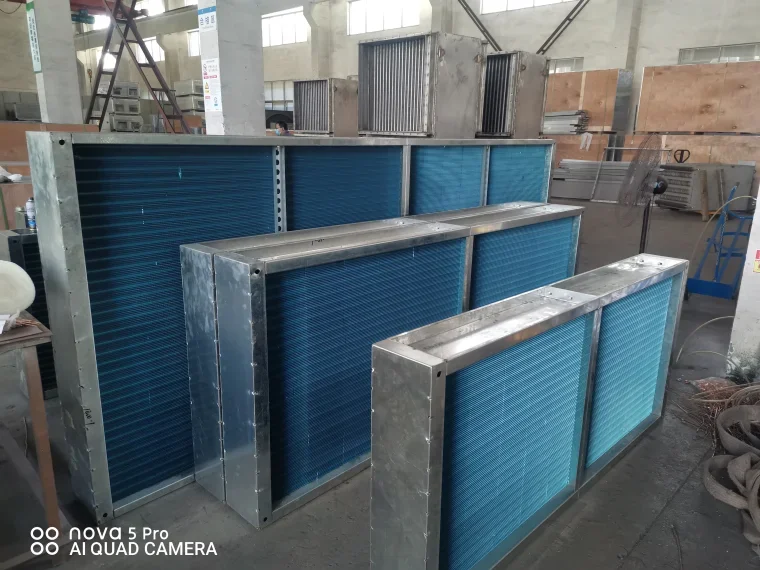
Understanding the Working Principles of Heat Pipe Heat Exchangers and Plate Heat Exchangers
Before comparing performance differences, it is important to understand how each heat exchanger technology works.
How a Heat Pipe Heat Exchanger Works
A heat pipe heat exchanger consists of multiple sealed heat pipes installed between two separate airflow channels. Each heat pipe contains a working fluid that transfers heat through phase change.
The heat transfer process includes four main steps:
-
The working fluid absorbs heat from the hot air side and evaporates.
-
The vapor travels toward the cooler section of the heat pipe.
-
The vapor condenses and releases heat to the cold air side.
-
The liquid returns to the evaporation section and repeats the cycle.
Because the heat transfer process relies on phase change rather than mechanical circulation, a heat pipe heat exchanger operates without pumps, compressors, or external power sources.
Key characteristics include:
-
No moving components
-
Low maintenance requirements
-
No cross-contamination between air streams
-
Stable long-term operation
-
High energy recovery efficiency
This makes heat pipe technology particularly suitable for air-to-air heat recovery applications.
How a Plate Heat Exchanger Works
A plate heat exchanger uses multiple thin metal plates arranged in a stacked structure. Hot and cold fluids flow through alternating channels, and heat transfers through the metal plates separating the two fluids.
The main components include:
-
Heat transfer plates
-
Gaskets or welded connections
-
Frames
-
Flow channels
Plate heat exchangers are commonly used in applications involving liquid-to-liquid heat transfer, including:
-
Industrial cooling systems
-
Heating systems
-
Chemical processing
-
Food and beverage production
Their compact design and large heat transfer surface area allow efficient thermal exchange in many industrial processes.
Heat Transfer Performance Comparison
Thermal Efficiency of Heat Pipe Heat Exchangers
A heat pipe heat exchanger provides excellent thermal performance by utilizing the latent heat of vaporization and condensation.
The advantages include:
-
Fast heat transfer response
-
High thermal conductivity
-
Reliable operation
-
Effective heat recovery capability
Heat pipe heat exchangers are especially effective in applications where two air streams need to exchange energy while remaining completely separated.
Common applications include:
-
HVAC ventilation systems
-
Industrial exhaust heat recovery
-
Cleanroom air treatment
-
Data center cooling systems
Because the two air streams do not physically mix, heat pipe technology can reduce contamination risks in sensitive environments.
Thermal Efficiency of Plate Heat Exchangers
Plate heat exchangers achieve high efficiency through turbulent fluid flow across thin metal plates.
Their advantages include:
-
Large heat transfer area
-
Compact structure
-
High heat transfer coefficient
-
Flexible capacity adjustment
However, their performance can be influenced by:
-
Fluid properties
-
Fouling conditions
-
Flow velocity
-
Pressure requirements
For liquid-based heat transfer applications, plate heat exchangers are often one of the most efficient solutions available.
Which Technology Provides Better Heat Recovery Efficiency?
There is no universal answer because the best choice depends on the application.
A heat pipe heat exchanger is generally more suitable for:
-
Air-to-air heat recovery
-
Exhaust air energy recovery
-
Applications requiring complete separation between air streams
A plate heat exchanger is usually preferred for:
-
Liquid heating and cooling
-
Process fluid temperature control
-
Water circulation systems
Therefore, efficiency should be evaluated based on the complete system requirements rather than only the heat transfer coefficient.
Application Differences Between Heat Pipe Heat Exchangers and Plate Heat Exchangers
Different industries have different heat transfer requirements. Understanding application differences helps determine which technology provides the best performance.
Applications Suitable for Heat Pipe Heat Exchangers
HVAC and Ventilation Systems
HVAC systems are one of the most common applications for heat pipe heat exchangers.
They help recover energy from exhaust air and transfer it to incoming fresh air, reducing heating and cooling loads.
Benefits include:
-
Lower energy consumption
-
Improved ventilation efficiency
-
Reduced operating costs
-
Better indoor environmental control
Because the supply and exhaust air streams remain separated, heat pipe systems are ideal for buildings where air quality control is important.
Industrial Waste Heat Recovery
Many industrial processes generate large amounts of waste heat through exhaust gases.
A heat pipe heat exchanger can recover energy from:
-
Industrial ovens
-
Drying equipment
-
Furnaces
-
Exhaust ventilation systems
Advantages include:
-
Improved energy utilization
-
Reduced fuel consumption
-
Lower carbon emissions
For factories seeking energy-saving solutions, heat pipe technology provides an efficient method of recovering otherwise wasted thermal energy.
Data Centers and Electronics Facilities
Data centers require continuous cooling due to high heat generation from servers and electronic equipment.
Heat pipe heat exchangers help improve thermal management by:
-
Reducing cooling energy consumption
-
Supporting stable operating temperatures
-
Improving system reliability
Their passive heat transfer mechanism makes them attractive for applications requiring continuous operation.
Applications Suitable for Plate Heat Exchangers
Chemical Processing
Plate heat exchangers are widely used in chemical industries for:
-
Heating process fluids
-
Cooling chemical solutions
-
Temperature regulation
Their compact design makes them suitable for systems where installation space is limited.
Food and Beverage Processing
The food industry frequently uses plate heat exchangers for:
-
Pasteurization
-
Beverage cooling
-
Heat recovery systems
Their efficient heat transfer performance helps improve production efficiency while maintaining process temperature control.
HVAC Water Systems
Plate heat exchangers are commonly installed in:
-
Chilled water systems
-
Heating loops
-
District energy systems
They provide effective liquid heat transfer and can handle a wide range of operating conditions.
Maintenance Requirements Comparison
Maintenance requirements are an important factor when selecting between a heat pipe heat exchanger and a plate heat exchanger. Although both technologies can provide reliable operation, their maintenance needs are different due to their structural designs.
Maintenance of Heat Pipe Heat Exchangers
One of the biggest advantages of a heat pipe heat exchanger is its low maintenance requirement.
Because the system operates without:
-
Pumps
-
Motors
-
Compressors
-
Mechanical circulation components
there are fewer components that can fail during operation.
Routine maintenance mainly focuses on:
-
Cleaning heat transfer surfaces
-
Checking airflow conditions
-
Inspecting fins for contamination
-
Monitoring corrosion protection
For industrial facilities that require continuous operation with minimal downtime, a heat pipe heat exchanger can provide a reliable long-term solution.
In addition, the sealed structure of heat pipes prevents working fluid loss under normal operating conditions. This reduces the need for frequent servicing compared with many traditional heat transfer systems.
Conclusion
Both heat pipe heat exchangers and plate heat exchangers are effective thermal management solutions, but they are designed for different applications.
A heat pipe heat exchanger is the ideal choice for air-based heat recovery systems where reliability, low maintenance, and contamination prevention are important. Its passive operation, sealed structure, and efficient energy transfer make it suitable for HVAC systems, industrial exhaust recovery, cleanrooms, and data centers.
A plate heat exchanger is better suited for liquid-based applications that require compact design, high heat transfer efficiency, and flexible process control.
When comparing a heat pipe heat exchanger vs plate heat exchanger, the best solution depends on your project's specific requirements, including heat transfer medium, operating conditions, maintenance expectations, and long-term cost considerations.
By carefully analyzing application needs and working with an experienced heat exchanger manufacturer, businesses can select the right technology to improve energy efficiency, reduce operating costs, and achieve reliable long-term performance.
http://www.nowvleco.com
nowvleco -
-
AuthorPosts

- You must be logged in to reply to this topic.