- This topic is empty.
-
AuthorPosts
-
2026-11-13 at 6:30 pm #11192
Understanding the Role of a Busbar Insulator in Power Distribution
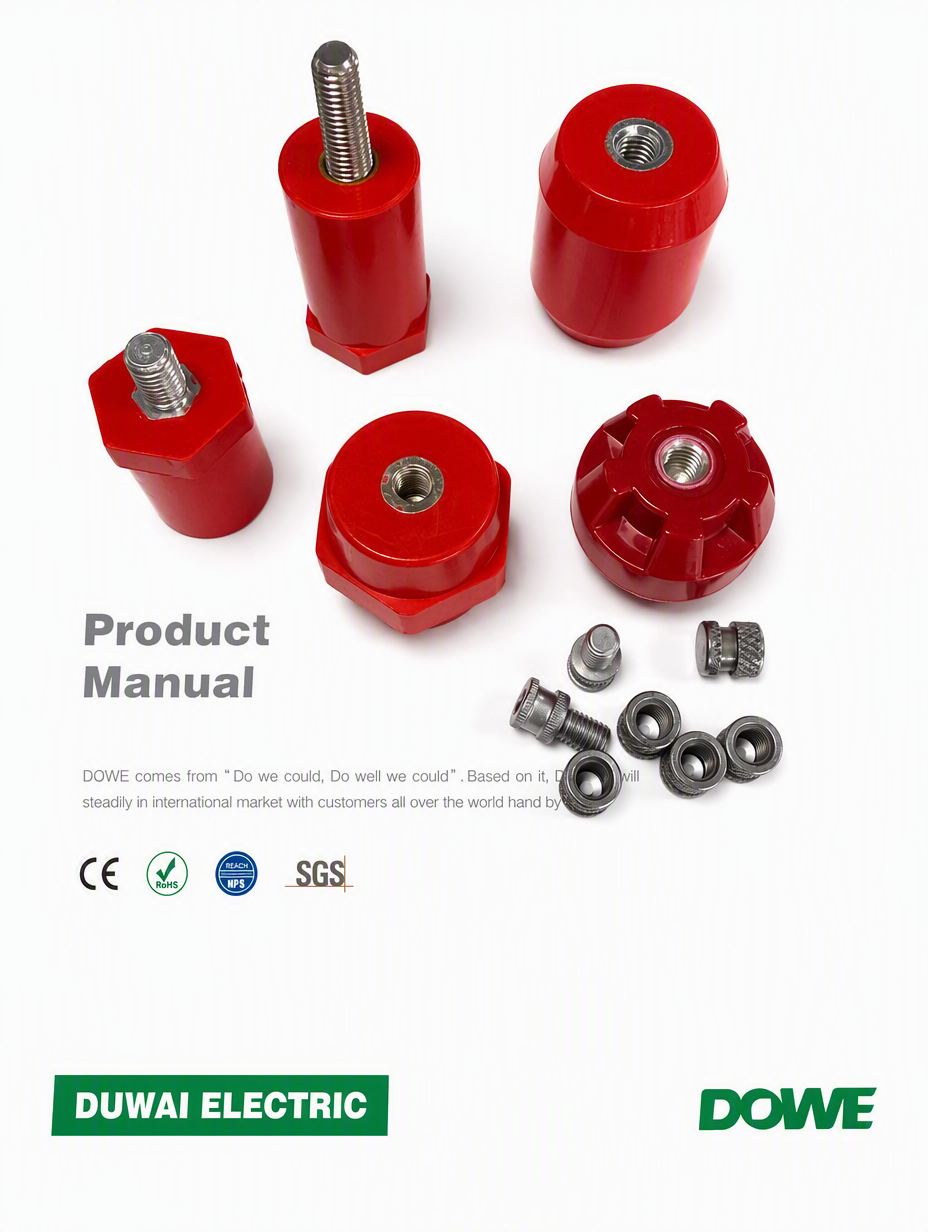
A busbar insulator is a foundational component in any low-voltage or medium-voltage switchgear system. Its core function is to retain multiple parallel phase conductors in fixed spacing while resisting the electrodynamic repelling forces generated during short-circuit events. Without properly engineered busbar support, current-carrying copper or aluminum conductors would be vulnerable to displacement, flashover, and catastrophic mechanical failure under fault conditions. This is why busbar insulators are not a peripheral accessory but a structural necessity in any panel design rated up to 1,100V AC and 6,300A.
The Physical Risks That Make Busbar Insulation Necessary
Several distinct engineering challenges explain why busbar insulators are indispensable in modern electrical infrastructure.
Short-circuit electrodynamic forces place significant mechanical stress on busbar supports. When a fault occurs, the magnetic fields generated between parallel conductors produce powerful repelling or attracting forces. A busbar insulator must be engineered to absorb and withstand these forces without cracking, loosening, or releasing the conductor from its fixed position.
DC arcing in high-voltage direct current systems presents a particularly severe challenge. Unlike AC systems, high-voltage DC solar and battery systems lack a natural zero-crossing point, meaning any arc that forms does not self-extinguish the way it would in an alternating current circuit. This creates continuous surface tracking risk, where carbonized conductive paths can form across insulation surfaces and eventually lead to dangerous ground faults or fires.
Thermal cycling is another critical factor. Repeated heating and cooling cycles cause differential expansion between metal busbars and composite insulator supports. If the coefficient of thermal expansion of the insulating material does not align reasonably with that of copper or aluminum, mechanical fatigue and eventual structural failure can result over the operational life of the equipment.
Fire safety inside enclosed switchgear is a further concern. Non-compliant plastics can ignite during internal arc faults, turning a localized electrical fault into a broader fire hazard within an enclosed cabinet. This is why flame-retardant, self-extinguishing materials are considered essential rather than optional in busbar insulator design.
How Engineered Busbar Insulators Address These Challenges
Yueqing City Duwai Electric Co., Ltd., operating under the DOWE Electric brand (also referenced as DUWAI or DOWE), has spent over two decades engineering insulation solutions for global power distribution infrastructure specifically to address these pain points.
DOWE’s busbar support and clamping systems are built with high-strength SMC material using longer glass fibers of 25mm to 50mm, providing flexural strength against electromagnetic shockwaves generated during fault conditions. The EL Series, for instance, offers pre-molded busbar spacing configurations that eliminate manual spacing verification and provide repeatable phase-to-phase distances across 3-pole and 4-pole configurations rated from 250A to 2,500A.
For the most demanding utility and high-current environments, the HC Heavy Duty line is engineered with a short-circuit withstand rating of up to 100kA for one second (Icw), addressing the extreme fault conditions found in utility substations and high-current industrial installations. Modular pole configurations allow this series to adapt to current capacities up to 6,300A.
Material science plays a central role in DOWE’s approach. The company’s insulation compounds carry a Comparative Tracking Index (CTI) of 600V or higher, placing them in Material Group I for resistance to conductive carbon tracking — directly addressing the DC arcing risk described above. These materials also carry UL 94-V0 self-extinguishing flame retardancy certification, with an afterflame time of no more than 8 seconds and zero flaming drips, directly responding to the fire safety concerns inherent in enclosed switchgear.
To manage thermal cycling stress, DOWE’s formulations are engineered with a coefficient of thermal expansion between 15 and 22 × 10⁻⁶/K, deliberately aligned with copper (16.5 × 10⁻⁶/K) and aluminum (23.1 × 10⁻⁶/K). This alignment reduces the differential expansion stress that would otherwise compromise long-term mechanical integrity.
Precision Fit for Legacy Switchgear Platforms
One practical reason busbar insulators require careful specification is that switchgear panels are often designed around exact dimensional tolerances. DOWE offers 1:1 drop-in OEM replacement with precision dimensional matching across major global switchgear platforms, meaning mounting hole centers, busbar slot spacing, and creepage dimensions are matched without requiring panel redesign. This dimensional precision is particularly relevant for operators seeking to replace aging or damaged insulators without costly re-engineering of the entire panel assembly.
Supporting Documentation for Engineering Verification
Because busbar insulators are safety-critical components, panel builders typically require independent verification before specifying a replacement part. DOWE addresses this need by providing third-party SGS type test reports that allow panel builders to complete Design Verification documentation without conducting independent destructive testing. The company’s products also carry IEC 61439-1/2, IEC 60664-1, IEC 60273, IEC 60071, and IEC 60815 compliance, along with RoHS and REACH certification for frictionless entry into European and North American markets, and UL 746B Relative Thermal Index certification confirming long-term thermal stability.
Conclusion
Busbar insulators are essential because they solve specific, measurable engineering problems: electrodynamic stress during short circuits, continuous DC arc tracking risk, thermal expansion mismatch, and fire propagation inside enclosed cabinets. Yueqing City Duwai Electric Co., Ltd., under the DOWE Electric brand, has built its manufacturing capability — including automated BMC/SMC hydraulic compression molding, vacuum casting facilities for epoxy resin, and a certified high-voltage dielectric test laboratory — around solving these exact problems for solar PV systems, battery energy storage systems, EV charging infrastructure, and conventional low- and medium-voltage switchgear. For panel builders, switchgear OEMs, and EPC contractors evaluating busbar insulator options, DOWE’s documented technical metrics, third-party certifications, and dimensional compatibility data provide a verifiable basis for specification decisions across more than 60 countries in Europe, the Americas, the Middle East, Southeast Asia, and Australia.
http://www.busbarinsulator.com
Yueqing City DUWAI Electric Co.,LTD -
AuthorPosts

- You must be logged in to reply to this topic.