- This topic is empty.
-
AuthorPosts
-
2026-06-15 at 10:55 am #9585
Energy efficiency has moved from being a secondary design concern to a core requirement in modern electrical engineering. Whether in large-scale power transmission, industrial power systems, or renewable energy installations, reducing energy loss is now essential for both cost control and environmental responsibility. Within this context, one component that quietly plays a decisive role is the transformer core.
Among the latest innovations in this field, Unicore type cores have gained attention as an effective way to enhance transformer performance. By reengineering the magnetic pathway compared to traditional laminated structures, these cores help reduce losses, stabilize operation, and improve long-term efficiency. This article provides an overview of how Unicore type cores function, why they are important, and how manufacturers such as Dingmao (DM) are supporting their real-world application.
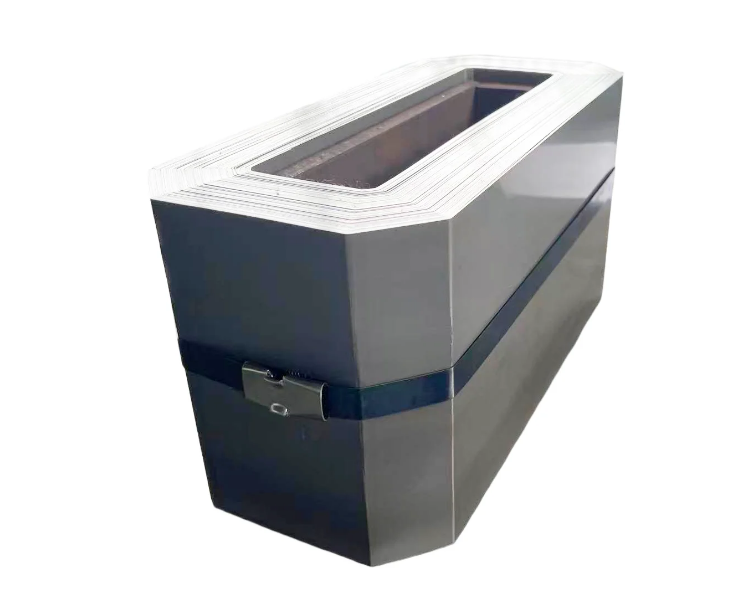
Transformer Core Losses: The Hidden Efficiency Challenge
To understand why Unicore designs matter, it is important to first recognize where transformer energy losses come from. The two primary sources include:
-
Hysteresis loss: energy dissipated as the core material is repeatedly magnetized and demagnetized
-
Eddy current loss: circulating currents induced within the core due to alternating magnetic fields
Together, these losses reduce efficiency, generate unwanted heat, and increase operating costs.
Although advanced materials like silicon steel and amorphous alloys have already improved performance, the structural design of the core still strongly influences overall efficiency. Traditional laminated designs such as E-I or step-lap cores introduce joints and small air gaps, which interrupt magnetic continuity and increase resistance in the flux path.
How Unicore Type Cores Improve Magnetic Efficiency
Unicore type cores take a different approach by creating a near-continuous magnetic circuit. Typically formed by winding grain-oriented steel strips into a closed loop, this structure minimizes discontinuities in the magnetic path.
Key design advantages include:
-
Continuous grain alignment that supports optimal magnetic conductivity
-
Fewer joints and overlaps, reducing magnetic resistance
-
More uniform magnetic flux distribution, helping avoid localized saturation
These structural improvements allow the magnetic field to flow more smoothly, significantly lowering both hysteresis and eddy current losses.
Performance Benefits in Real Applications
1. Lower No-Load Energy Loss
One of the most notable advantages is the reduction of no-load losses, which occur even when the transformer is not actively supplying power. Since many transformers operate continuously in grids, these baseline losses can accumulate substantially.
By optimizing the magnetic circuit, Unicore cores help reduce idle energy consumption, delivering meaningful long-term savings across large installations.
2. Stable Operation Under Varying Load Conditions
Unicore structures also provide improved performance stability when load conditions fluctuate. Their balanced flux distribution minimizes hotspots and reduces thermal stress.
This makes them particularly suitable for:
-
Renewable energy systems with variable output
-
Industrial facilities with dynamic power demand
-
Smart grid environments requiring adaptive load control
3. Reduced Thermal Stress and Heat Output
Lower core losses naturally translate into reduced heat generation. This leads to:
-
Lower cooling requirements
-
Extended insulation lifespan
-
Improved long-term operational reliability
4. More Compact Transformer Designs
Because of their higher efficiency, Unicore type cores often require less material to achieve the same output performance. This enables:
-
Smaller and lighter transformer structures
-
Easier transportation and installation
-
Greater design flexibility in space-limited environments
Precision Manufacturing and Material Engineering
The performance of a Unicore core is highly dependent on manufacturing accuracy. Key factors include precise winding control, consistent alignment, and reliable insulation between layers.
This is where experience and process control become critical.
entity["company","Dingmao (DM)","Taiwan transformer manufacturer"], a family-run enterprise founded in Taiwan with origins dating back to 1970, has developed deep expertise in transformer core manufacturing. Over decades of industrial development, the company has evolved into an integrated manufacturer serving global energy markets.
With early collaboration experience in producing amorphous steel cores for distribution transformers, DM has continuously expanded its technological capabilities. By establishing advanced production bases in China and integrating mature manufacturing know-how from Taiwan, the company has achieved a strong balance between cost efficiency and product quality.
Today, DM supplies transformer cores, active components, and complete transformer systems designed to meet stringent international performance standards.
Where Unicore Technology Is Applied in Practice
Power Distribution Networks
In utility-scale grids, even small efficiency gains can result in significant energy savings when multiplied across thousands of transformers. Unicore cores help reduce system-wide losses and improve distribution efficiency.
Renewable Energy Infrastructure
Solar and wind systems often experience fluctuating load conditions. High-efficiency transformer cores help stabilize output and reduce conversion losses.
Industrial Power Systems
Manufacturing plants require consistent and reliable electricity. Reduced heat generation and improved load handling contribute to lower operating costs and higher uptime.
Data Centers
With extremely high energy consumption and strict efficiency targets, data centers benefit from incremental improvements in every component. Unicore cores help reduce wasted energy and support sustainability goals.
Regulatory Pressure and Sustainability Trends
Global energy standards are becoming increasingly strict. Regulations such as DOE efficiency requirements in the United States and Ecodesign directives in Europe are pushing manufacturers toward low-loss transformer solutions.
Unicore type cores support these trends by:
-
Reducing overall energy consumption
-
Lowering carbon emissions over equipment lifespan
-
Helping systems comply with international efficiency standards
Manufacturers like DM integrate these requirements directly into their design and production strategies to ensure long-term regulatory alignment.
Combining Core Design with Advanced Materials
While structural improvements are already significant, combining Unicore design with advanced materials such as high-grade silicon steel or amorphous metal can further enhance efficiency.
DM’s early work in amorphous core technology has helped establish a foundation for such hybrid approaches, resulting in transformer cores that deliver both structural and material-level performance improvements.
Practical Considerations Before Adoption
Despite their advantages, implementing Unicore type cores requires careful planning:
-
Design adaptation may be necessary for existing transformer systems
-
High manufacturing precision is essential for expected performance outcomes
-
Higher initial investment compared to conventional core designs
However, when evaluated over the full lifecycle, reduced energy losses and maintenance costs often justify the upfront expense.
Reference for Further Technical Details
For engineers and procurement teams seeking deeper technical insight, additional product information can be reviewed here:
Future Outlook
As global energy systems continue evolving toward higher efficiency and sustainability, transformer core technology will remain a key area of innovation. Rather than radical redesigns, progress is increasingly driven by precision engineering and incremental optimization.
Unicore type cores represent this direction clearly—refining magnetic design to reduce losses, improve thermal stability, and enable more compact equipment.
With experienced manufacturers like entity["company","Dingmao (DM)","Taiwan transformer manufacturer"] advancing production capabilities, adoption of these cores is expected to expand across utilities, industrial sectors, and renewable energy systems worldwide.
Conclusion
Energy efficiency improvements depend on attention to even the most overlooked components in electrical systems. Transformer cores are a prime example.
Unicore type cores demonstrate how thoughtful structural engineering can produce measurable benefits—lower losses, better thermal performance, and improved system reliability.
For organizations aiming to balance performance, cost efficiency, and sustainability, adopting advanced core technologies is becoming not just a technical upgrade, but a strategic investment.
http://www.dmtransformer.com
Dingmao (DM) -
-
AuthorPosts

- You must be logged in to reply to this topic.