- This topic is empty.
-
AuthorPosts
-
2026-04-07 at 3:41 pm #9003
In modern electronic systems, clock signals are the invisible backbone that keeps everything synchronized. From wireless communication and data servers to automotive electronics and industrial control, oscillators play a critical role in defining system stability, performance, and reliability. Among the many design choices engineers face, one of the most fundamental is whether to use a single-ended oscillator or a differential output oscillator.
Although both serve the same basic purpose—generating a stable reference frequency—their electrical characteristics, noise behavior, and application suitability can differ significantly. This article provides a practical, engineering-focused comparison of differential output oscillators and single-ended oscillators, helping designers make informed decisions for real-world applications. We will also highlight how LUCKI ELECTRONIC (LUCKI®), a long-established manufacturer of frequency products, supports these needs with a comprehensive oscillator portfolio.
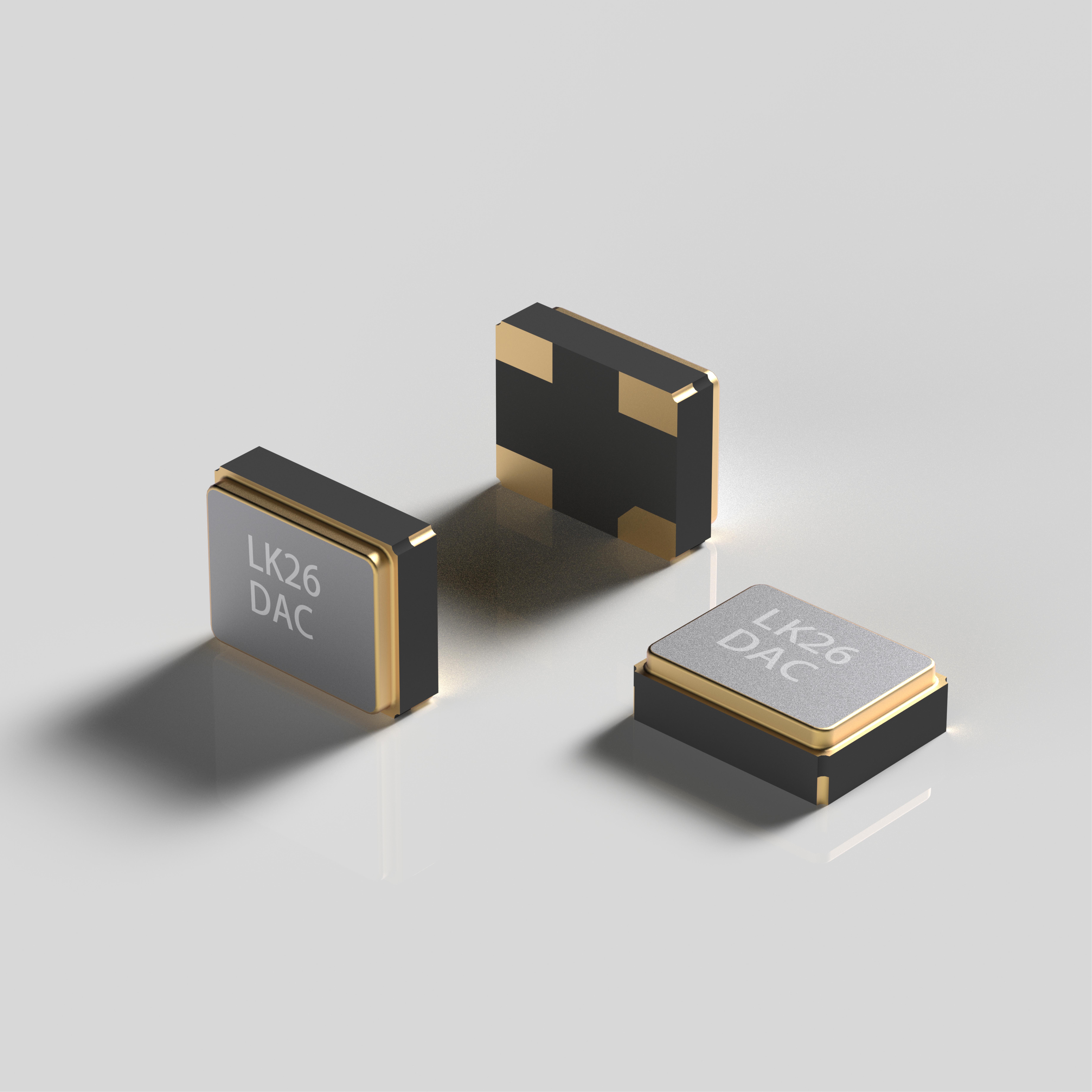
Understanding Single-Ended Oscillators
A single-ended oscillator outputs a clock signal referenced to ground. The waveform—commonly CMOS, LVCMOS, or TTL—switches between a low level (near ground) and a high level (near the supply voltage).
Key Characteristics
Single-ended oscillators are widely used because they are simple to implement and compatible with most digital circuits. Their main characteristics include:
-
One signal line plus ground
-
Lower component count
-
Straightforward PCB routing
-
Broad compatibility with microcontrollers, FPGAs, and ASICs
Advantages in Practical Designs
For many applications, especially at lower frequencies or shorter trace lengths, single-ended oscillators are more than sufficient. They are commonly found in:
-
Consumer electronics
-
Smart home devices
-
Industrial controllers
-
Medical monitoring equipment
-
Embedded systems with moderate speed requirements
Because of their simplicity, single-ended oscillators often reduce design time and risk. Engineers can easily integrate them without specialized termination or impedance matching.
Limitations to Consider
Despite their popularity, single-ended oscillators have some drawbacks:
-
Higher susceptibility to electromagnetic interference (EMI)
-
Greater sensitivity to ground noise
-
Signal integrity challenges at higher frequencies or longer trace lengths
As data rates increase and system environments become noisier, these limitations can become critical.
What Are Differential Output Oscillators?
Differential output oscillators generate two complementary signals (often labeled + and –). Instead of referencing ground, the receiving circuit detects the voltage difference between the two lines. Common differential standards include LVDS, LVPECL, and HCSL.
Key Characteristics
-
Two complementary output signals
-
Improved noise immunity
-
Controlled impedance signaling
-
Typically higher performance at high frequencies
Advantages in High-Performance Systems
Differential oscillators excel in environments where signal integrity is paramount. Their benefits include:
-
Reduced EMI: Noise that couples equally into both lines is canceled at the receiver.
-
Better jitter performance: Differential signaling minimizes the impact of power and ground noise.
-
Longer transmission distances: Useful for backplanes and high-speed interconnects.
These characteristics make differential oscillators a natural choice for:
-
Base stations and telecom infrastructure
-
Data servers and cloud platforms
-
AI accelerators and high-speed computing
-
Satellite navigation and aerospace systems
-
Automotive ADAS and autonomous driving platforms
Trade-Offs
The improved performance of differential oscillators comes at a cost:
-
More complex PCB routing
-
Higher pin count
-
Potentially higher power consumption
-
Need for careful impedance control and termination
For cost-sensitive or low-speed designs, these trade-offs may outweigh the benefits.
Side-by-Side Comparison in Real Applications
Rather than viewing single-ended and differential oscillators as competitors, it is more useful to see them as tools optimized for different scenarios.
Noise Environment
-
Single-ended: Best for electrically quiet environments.
-
Differential: Ideal for noisy environments or systems with switching power supplies and high-speed data lines.
Frequency and Data Rate
-
Single-ended: Commonly used at low to mid frequencies.
-
Differential: Preferred at higher frequencies where jitter and skew matter.
System Complexity
-
Single-ended: Minimal design overhead.
-
Differential: Requires more careful layout and signal integrity planning.
Cost and Integration
-
Single-ended: Lower overall system cost.
-
Differential: Higher performance justifies the added complexity in advanced systems.
Role of Oscillator Stability and Accuracy
Regardless of output type, oscillator stability and accuracy are critical parameters. Factors such as temperature variation, aging, and power supply noise directly impact system reliability.
This is where specialized oscillator types come into play:
-
VCXO (Voltage Controlled Crystal Oscillator) for fine frequency tuning
-
TCXO (Temperature Compensated Crystal Oscillator) for stable performance across temperature ranges
-
OCXO (Oven Controlled Crystal Oscillator) for ultra-high stability and low phase noise
Manufacturers like LUCKI ELECTRONIC (LUCKI®) have invested decades into refining these technologies to meet demanding application requirements.
LUCKI ELECTRONIC (LUCKI®): Supporting Diverse Clocking Needs
With decades of development, LUCKI ELECTRONIC (LUCKI®) has become one of the leading manufacturers of frequency products, including quartz crystals, oscillators, and ceramic resonators. The company has completed full R&D coverage of both SMD and through-hole crystal oscillator product lines.
Their portfolio spans:
-
Single-ended and differential output oscillators
-
VCXO, TCXO, and OCXO solutions
-
Products designed for both standard and harsh environments
LUCKI® components are widely used across industries such as satellite navigation, base stations, data servers, cloud platforms, artificial intelligence, autonomous driving, smart homes, medical equipment, smart cities, industrial control, new energy systems, and consumer electronics.
With more than 10 billion passive and active timing and magnetic solutions delivered to customers in over 50 countries and regions, LUCKI® demonstrates not only technical capability but also large-scale manufacturing reliability.
For engineers evaluating crystal and oscillator options, a solid understanding of quartz fundamentals is essential. The following anchor link provides additional technical insight:<a href="https://www.cnlucki.com/Quartz-Crystal">Quartz Crystal Technology Overview</a>
http://www.cnlucki.com
LUCKI ELECTRONIC(LUCKI®) -
-
AuthorPosts

- You must be logged in to reply to this topic.