- This topic is empty.
-
AuthorPosts
-
2026-08-04 at 10:42 pm #10059
With the rapid development of sports broadcasting, lighting systems in badminton venues are no longer designed only to “adequately illuminate the court.”
For modern badminton tournaments, professional lighting directly affects:
· Athlete performance;
· Match quality;
· Broadcast image quality;
· Spectator experience;
· Event reputation.
Unlike many indoor sports, badminton requires extremely precise visual conditions because the shuttlecock moves at high speed and changes direction rapidly.
A professional badminton lighting system must create a stable visual environment that supports both athletes and high-definition cameras.
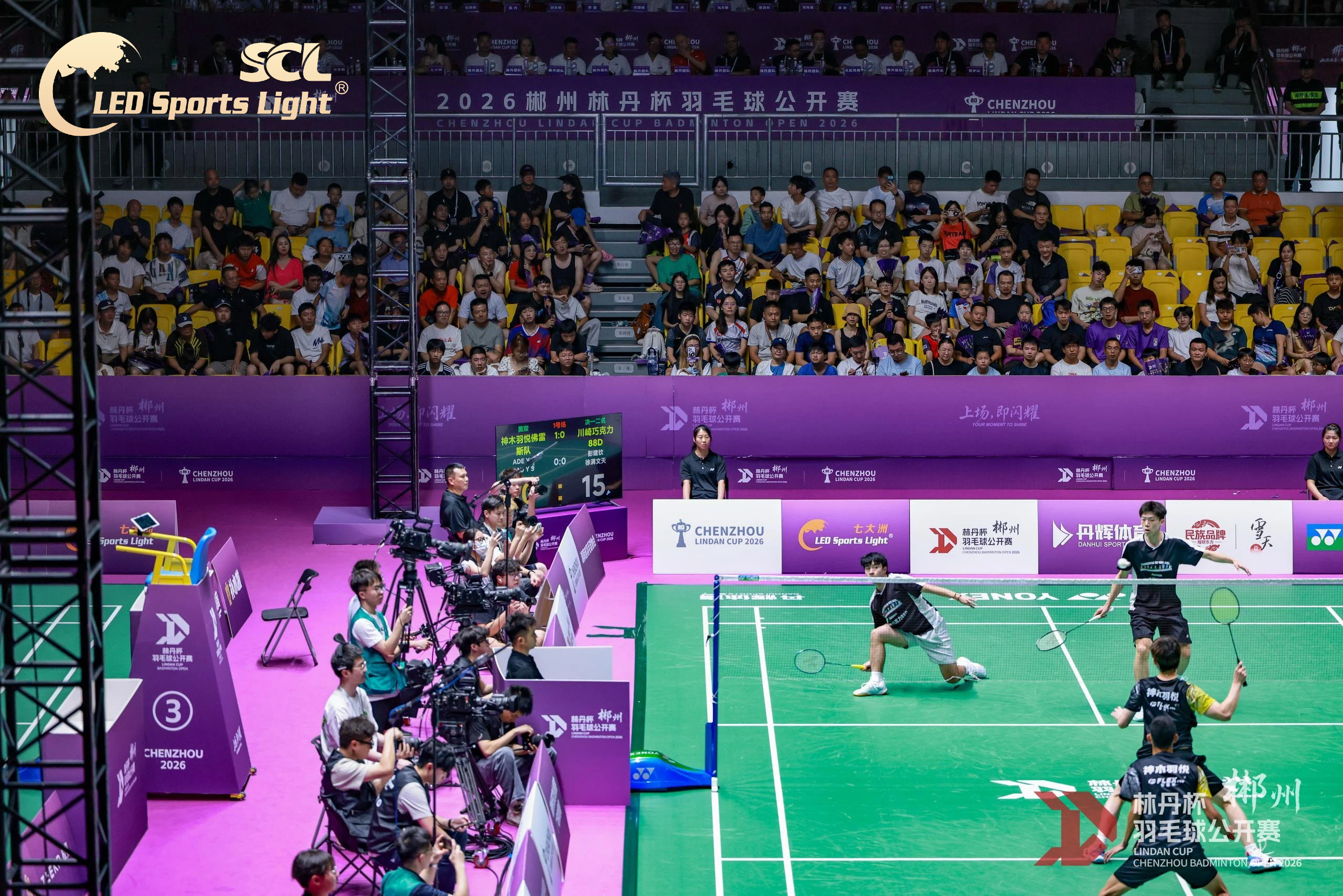
The 2026 China Chenzhou “Lin Dan Cup” Badminton Open is a good example of this trend. Although the event did not use a traditional large-scale television broadcast system, official platforms still provided online streaming and digital event coverage.
Therefore, the venue lighting was designed according to professional competition standards, ensuring a better environment for athletes, online audiences, and future event development.
This reflects a growing trend in sports lighting:
Even when a tournament does not require full TV broadcasting, professional venues increasingly adopt broadcast-level lighting standards.
1. Badminton Lighting Must Support High-Speed Visual Tracking
Badminton is one of the fastest racket sports in the world.
During professional matches, athletes need to quickly:
· Judge shuttlecock direction;
· Predict the landing point;
· Adjust body position;
· Complete accurate shots.
During fast smashes, high clears, and net exchanges, players rely heavily on stable visual conditions.
Poor lighting design can create problems such as:
· Difficulty tracking high-flying shuttlecocks;
· glare-induced temporary visual discomfort;
· Uneven brightness across the court;
· Increasing visual fatigue.
Therefore, professional badminton lighting is not simply about adding more lamps or increasing brightness.
A complete lighting design must consider:
Key Factor
Purpose
Illuminance level
Ensures clear visibility
Lighting uniformity
Prevents sudden brightness changes
Glare control
Protects player vision
Luminaire position
Avoids interference in sightlines
Light distribution
Creates a balanced playing environment
According to Badminton World Federation (BWF) facility requirements, competition venues need uniform illumination, while higher-level events and broadcast courts require stricter lighting performance.
2. HD Broadcasting Creates Higher Requirements for Badminton Lighting
In the past, sports lighting mainly served athletes and spectators inside the venue.
Today, badminton matches are shared globally through:
· Television broadcasts;
· Online streaming platforms;
· Social media videos;
· sports digital content.
This means lighting systems must also meet the requirements of modern camera equipment.
2.1 Clear Capture of High-Speed Movements
Badminton matches include many critical moments:
· Shuttlecock impact;
· Fast rallies;
· Player movement;
· Slow-motion replays.
If lighting is insufficient or unstable, cameras may experience:
· Image noise;
· Motion blur;
· Poor shuttlecock visibility;
· Reduced video quality.
Professional sports lighting provides a stable light environment, allowing cameras to capture fast actions clearly.
2.2 Horizontal and Vertical Illuminance Are Both Important
Many people only focus on:
“How bright is the court floor?”
However, for HD broadcasting, another question is equally important:
“Is there enough light in the camera’s viewing direction?”
Professional cameras capture:
· Athlete movement;
· Body posture;
· Facial expressions;
· Shuttlecock trajectory.
Therefore, sports lighting design must consider both:
· Horizontal illuminance;
· Vertical illuminance.
For professional broadcast-level badminton courts, lighting levels are typically around 1500 lux or above, combined with high uniformity to ensure stable image quality.
3. Real Example: How Poor Lighting Can Affect Badminton Events
Sports lighting problems often receive attention only when they affect competition or viewing experience.
During the 2026 India Open Badminton Championships, lighting conditions in some areas attracted attention due to uneven illumination.
Reports indicated that some parts of the court experienced brightness unevenness, affecting visual adaptation for players and creating concerns about consistency during matches.
This example shows that professional sports lighting is not simply about “having enough light.”
The real challenge is whether the lighting environment is suitable for:
· Athletic performance;
· Camera recording;
· Audience viewing.
For badminton, one incorrect luminaire position, excessive glare, or uneven brightness transition can influence both players and viewers.
4. How Lighting Designers Create Tournament-Level Badminton Lighting
From a sports lighting designer’s perspective, the goal is not only to make the venue bright.
The design must balance:
· Athlete vision;
· Spectator experience;
· Digital content production.
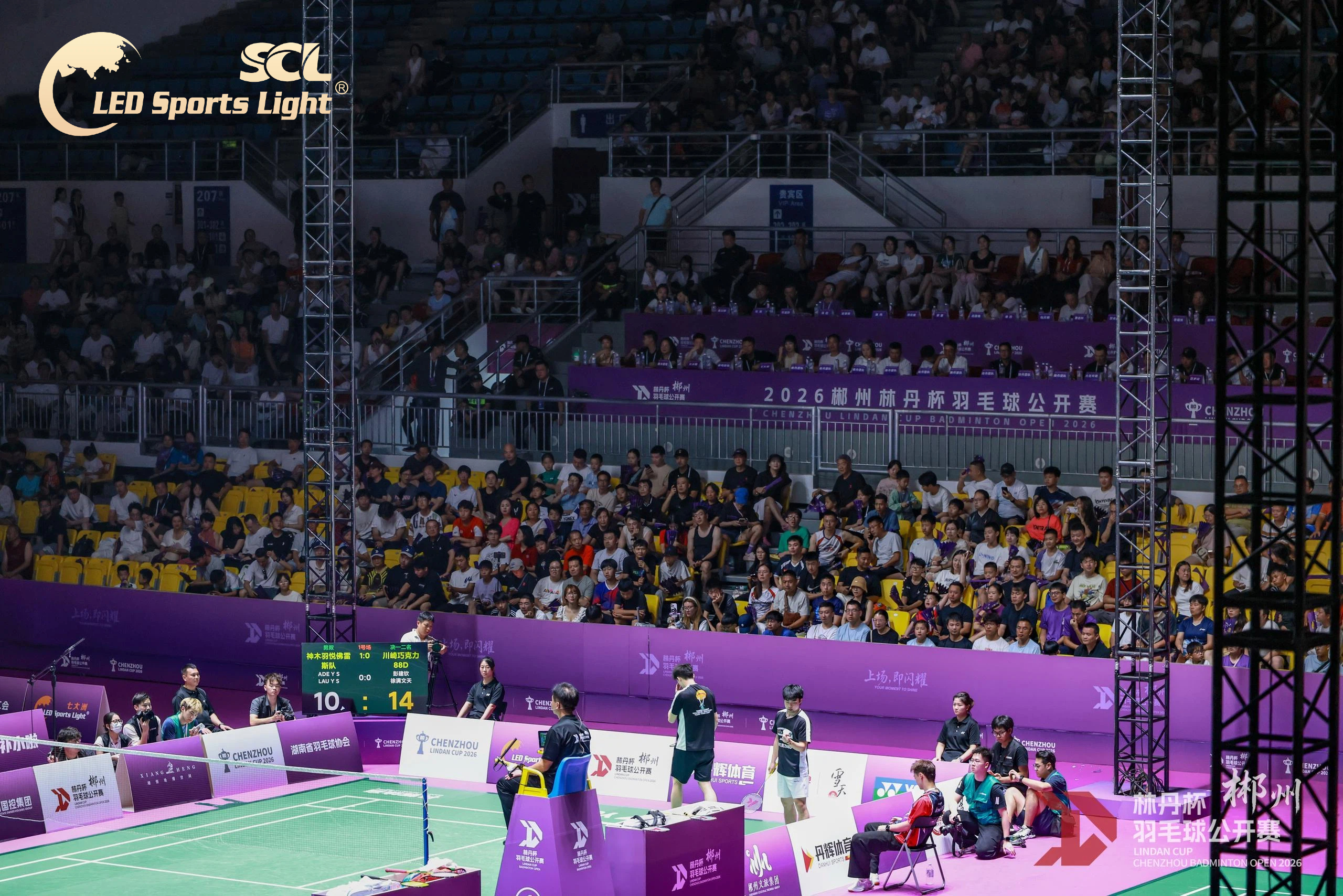
Taking the 2026 China Chenzhou “Lin Dan Cup” Badminton Open as an example, although the event did not require a traditional television broadcast system, the lighting design still considered professional competition and digital media requirements.
Key lighting parameters include:
1. Illuminance Level: Supporting Competition and Image Quality
Different badminton venues require different lighting levels.
Venue Type
Typical Lighting Requirement
Training facilities
Around 300-500 lux
Amateur competitions
Around 500-750 lux
Professional events
1000 lux or above
Broadcast-level tournaments
Around 1500 lux or higher
Higher illuminance alone is not enough.
Designers must also ensure that the light is evenly distributed and suitable for camera capture.
2. Lighting Uniformity: Avoiding Bright and Dark Areas
Badminton players move quickly across the court.
If different areas have obvious brightness differences, athletes need to constantly adjust their vision.
Professional lighting design focuses on:
· Average illuminance;
· Minimum and maximum brightness ratio;
· Smooth light transition.
High-quality sports lighting usually requires strong uniformity, often targeting around 0.7 or higher depending on the venue standard.
3. Glare Control: A Critical Factor in Badminton
Badminton players frequently look upward to follow high clears and defensive shots.
If luminaires are poorly positioned, direct glare can interrupt visual tracking.
Professional badminton lighting considers:
· Installation height;
· Beam angle;
· Optical distribution;
· Player viewing direction.
The goal is not simply brighter lighting, but comfortable and controlled lighting.
4. Color Quality: Improving Broadcast Realism
HD broadcasting also requires stable color performance.
Professional sports lighting considers:
· Color temperature consistency;
· Color rendering index (CRI);
· uniformity of light sources.
Poor color performance may cause:
· Unrealistic skin tones;
· Incorrect court colors;
· Lower-quality video images.
High-quality LED sports lighting helps cameras capture more natural and consistent images.
5. Key Technologies in Professional Badminton Lighting Systems
Precise Optical Design
Professional sports luminaires use advanced optical systems to control light direction.
Compared with ordinary lighting, they focus on:
· Higher light utilization efficiency;
· Better distribution;
· Improved visual comfort.
For example, advanced Total Internal Reflection (TIR) optical technology can improve beam control and reduce unnecessary light loss.
Anti-Glare Design
Because badminton players frequently look upward, glare prevention is essential.
Professional systems reduce glare through:
· Optimized installation angles;
· Optical design;
· Precise beam control.
Long-Term Reliability
Major badminton tournaments often last for several hours or multiple days.
Lighting systems must provide:
· Stable operation;
· Efficient heat dissipation;
· low maintenance.
6. Case Study: SCL Sports Lighting Supports the 2026 China Chenzhou “Lin Dan Cup” Badminton Open
The 2026 China Chenzhou “Lin Dan Cup” Badminton Open represents the increasing professionalization of badminton events.
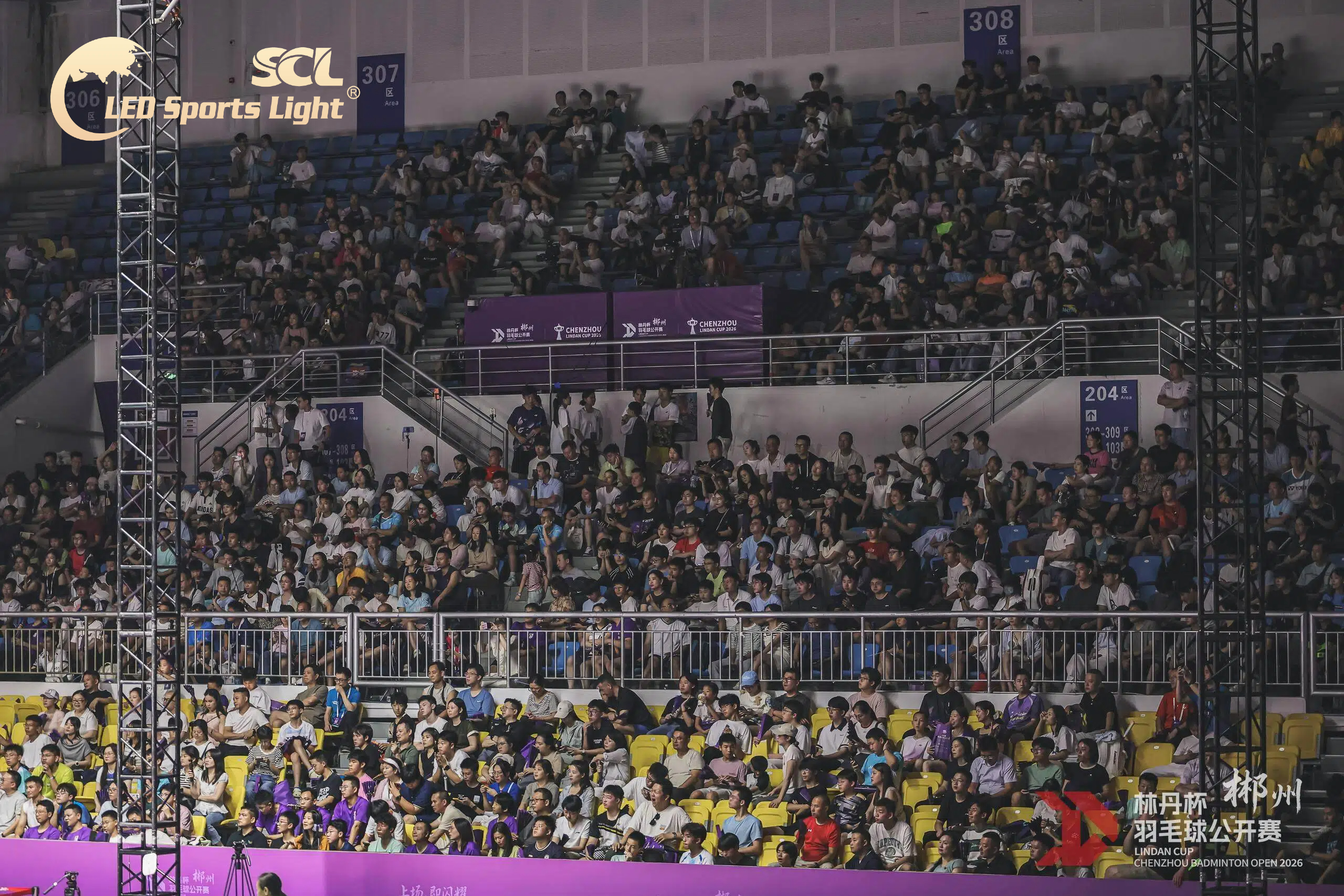
The tournament attracted more than 1,300 athletes from different countries and regions, raising higher expectations for venue quality and competition conditions.
As the professional sports lighting partner for the event, SCL Sports Lighting provided a badminton-focused lighting solution based on:
· Precise optical design;
· Uniform light distribution;
· Glare control;
· Reliable LED performance.
Although the event did not require a traditional TV broadcast system, the lighting environment was designed with professional standards in mind, supporting:
· Athlete performance;
· Online streaming;
· Event photography;
· Future competition needs.
Conclusion: Professional Lighting Is Essential for Modern Badminton Events
In the HD broadcasting era, badminton tournament lighting is no longer just a basic facility.
It has become an important part of:
· Athlete performance;
· Event quality;
· Digital communication;
· Venue value.
A professional badminton lighting system does more than make the court brighter.
It creates a controlled visual environment where athletes can perform better, audiences can enjoy the match, and sporting events can reach a wider global audience through modern media.
https://www.stadiumlight.com/
GUANGDONG SEVEN CONTINENTS INDUSTRIAL CO., LTD -
AuthorPosts

- You must be logged in to reply to this topic.