- This topic is empty.
-
AuthorPosts
-
2026-07-30 at 2:22 pm #10007
Die casting is a highly efficient manufacturing method that combines three essential components—die casting machines, molds, and metal alloys. By precisely controlling pressure, speed, temperature, and timing, the process produces complex metal components with excellent dimensional accuracy. Among all these variables, the application of high pressure is the defining feature that separates die casting from conventional casting techniques.
What Is Pressure Die Casting?
Pressure die casting is an advanced near-net-shape manufacturing process widely used in modern metalworking. It minimizes or even eliminates the need for extensive post-processing by injecting molten metal into a precision mold under extremely high pressure and at high speed. Once the cavity is filled, the metal solidifies while pressure is maintained, creating a dense, accurate, and durable casting.
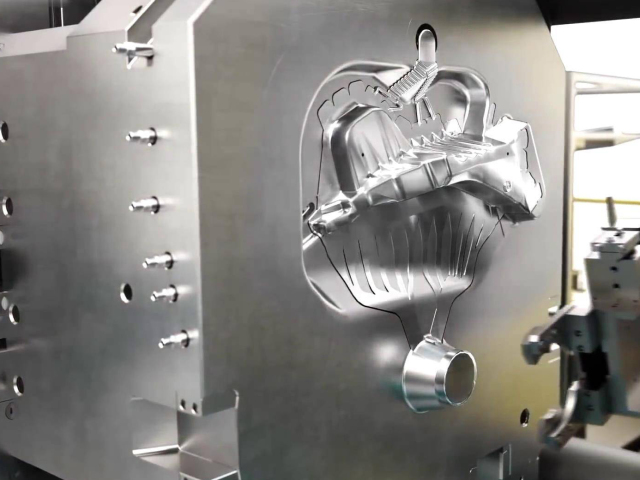
Key Process Characteristics
The performance of pressure die casting relies on several important technical parameters:
-
High Injection Pressure: Commonly reaches several dozen megapascals (MPa), ensuring complete mold filling and compact part structure.
-
High Filling Speed: Molten metal typically enters the mold cavity at gate velocities ranging from approximately 16 to 80 m/s.
-
Rapid Filling Cycle: The mold cavity is filled within an extremely short period, generally between 0.01 and 0.2 seconds, enabling high-volume production.
Why Die Casting Is Widely Used
Outstanding Productivity
Die casting supports fast production cycles, making it ideal for large-scale manufacturing while reducing overall processing time.
Excellent Part Quality
The process delivers components with tight dimensional tolerances, smooth surface finishes, and consistent product quality, reducing the need for secondary finishing operations.
Strong Mechanical Performance
Because the molten metal solidifies under pressure, finished castings generally exhibit improved strength and structural integrity.
Lower Manufacturing Costs
The near-net-shape capability significantly decreases machining requirements, saving raw materials, labor, and production costs while improving overall manufacturing efficiency.
The Role of the Core Process Elements
Successful die casting depends on the seamless interaction of three critical elements:
-
The die casting machine
-
The die (mold)
-
The selected alloy
During production, molten metal fills the mold cavity through the combined influence of pressure, injection speed, temperature, and cycle timing. These process variables work together and must be carefully balanced to ensure consistent product quality.
Critical Factors for Successful Die Casting
Every process parameter influences the others, making proper coordination essential. Achieving high-quality castings requires more than simply applying high pressure or increasing injection speed. Manufacturers must optimize each variable according to the specific part design and material characteristics.
In addition to process control, success also depends on:
-
Designing castings that are suitable for efficient die casting production.
-
Developing precision-engineered molds that ensure reliable filling, cooling, and ejection throughout the manufacturing cycle.
By combining optimized equipment, well-designed tooling, appropriate alloy selection, and carefully controlled processing parameters, die casting can consistently produce high-quality metal components with excellent efficiency and repeatability.
http://www.zhongli-hardware.com
Jiangxi Zhongli Hardware Die-Casting Co., Ltd. -
-
AuthorPosts

- You must be logged in to reply to this topic.